
Best long leg
Bryce Canyon City Supercharger to La Verkin Supercharger (Zion gateway)
1.88 mi/kWh
110.1 miles with an estimated 265 mile full-pack range at that pace.
Rivian R1T towing range
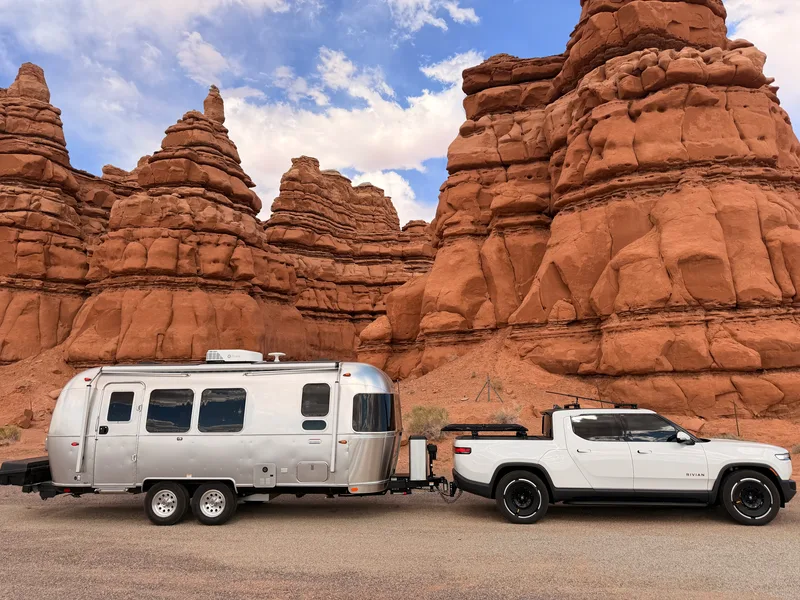
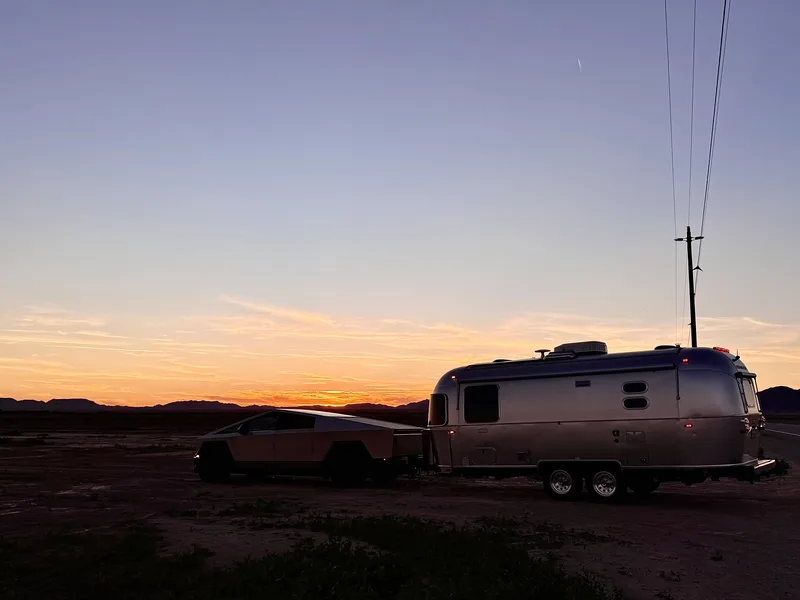
A Rivian R1T can tow 11,000 pounds. The harder question is how far it can tow before the next fast charger. Here is the measured answer from a Max Pack R1T and a loaded 23-foot Airstream.

Battery size does not make the trailer more aerodynamic. It just gives you more room between fast chargers. These estimates use our measured Airstream efficiency and Rivian pack sizes.
| R1T pack | Usable kWh | Full-pack tow range | 10 to 80 percent tow leg | Read it this way |
|---|---|---|---|---|
| Standard | 92 | 114 mi | 80 mi | Short hops only with this trailer |
| Large | 109 | 136 mi | 95 mi | Workable with dense charger spacing |
| Max measured rig | 141 | 175 mi | 123 mi | Our measured setup |
The 10 to 80 percent column uses 70 percent of the pack because that is the fast-charge rhythm most EV road trips settle into. The exact stop plan still depends on charger spacing, elevation, wind, and how low you are comfortable arriving with a trailer.
Best long leg
1.88 mi/kWh
110.1 miles with an estimated 265 mile full-pack range at that pace.
Hardest long leg
0.92 mi/kWh
108.1 miles with an estimated 130 mile full-pack range at that pace.
Wind penalty
42 mi
That is the measured full-pack range swing between the best and worst wind buckets in the tow ledger.
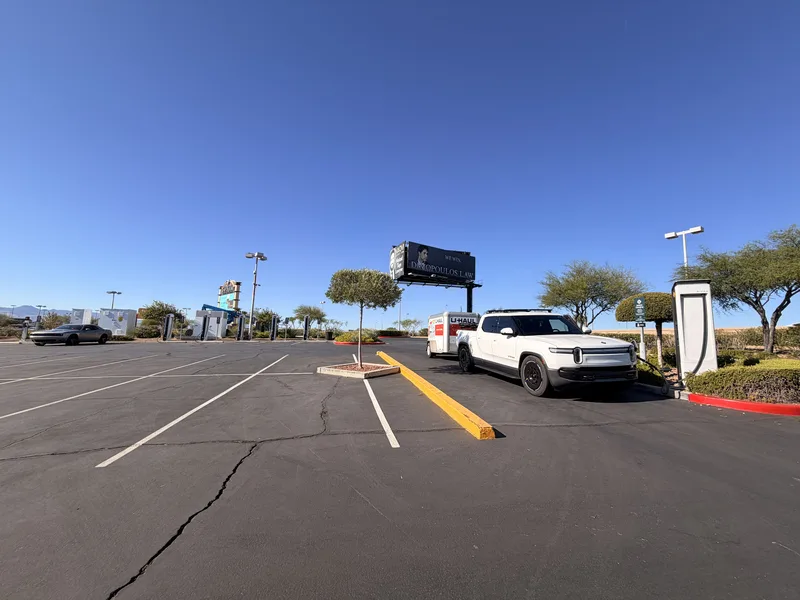
The R1T has enough battery for long towing legs. The road-trip skill is matching those legs to chargers you can enter, reach, and leave without turning the stop into a parking-lot puzzle.
Rivian Adventure Network
39 sessions
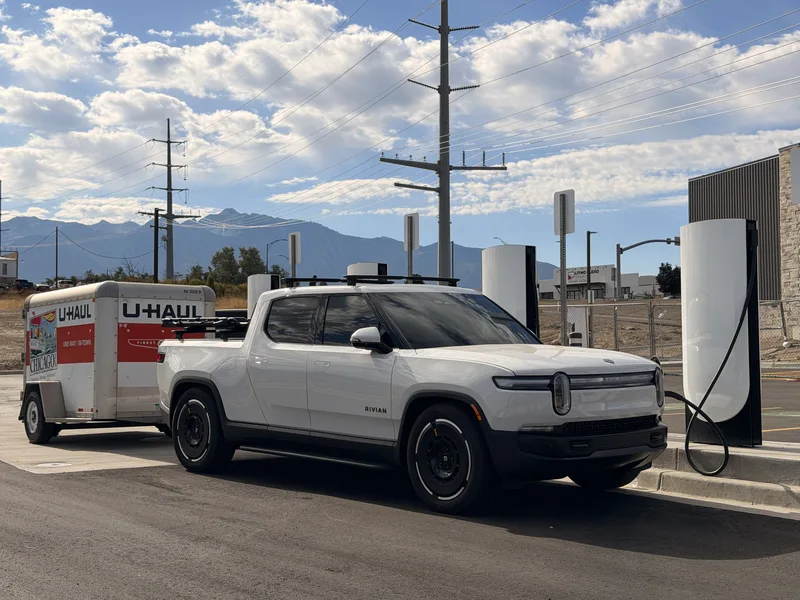
3,155.9 kWh logged, 127 kW avg, $0.49/kWh list.
Tesla Supercharger
26 sessions
1,486.7 kWh logged, 108 kW avg, $0.40/kWh list.
IONNA
5 sessions
530.8 kWh logged, 149 kW avg, $0.39/kWh list.
Electrify America
1 sessions
97.3 kWh logged, 80 kW avg, $0.61/kWh list.
For the full network table, open charging network comparison. For the condition math, read EV towing efficiency by wind, grade, and temperature.
EV towing library
Field reports, truck comparisons, and the measured data, all in one place.
Take the data
Plain-text citation
Wattreach. Real-world EV towing dataset: Rivian R1T Tri-Motor Max Pack towing a 23-foot Airstream International. 5,262 measured towing miles, 51 tow segments, 1.24 mi/kWh weighted average. https://wattreach.com/the-rig/