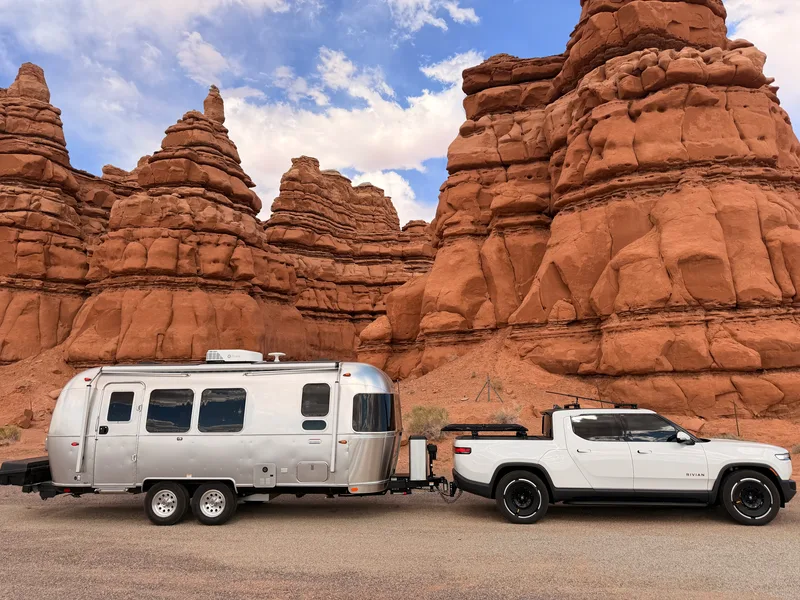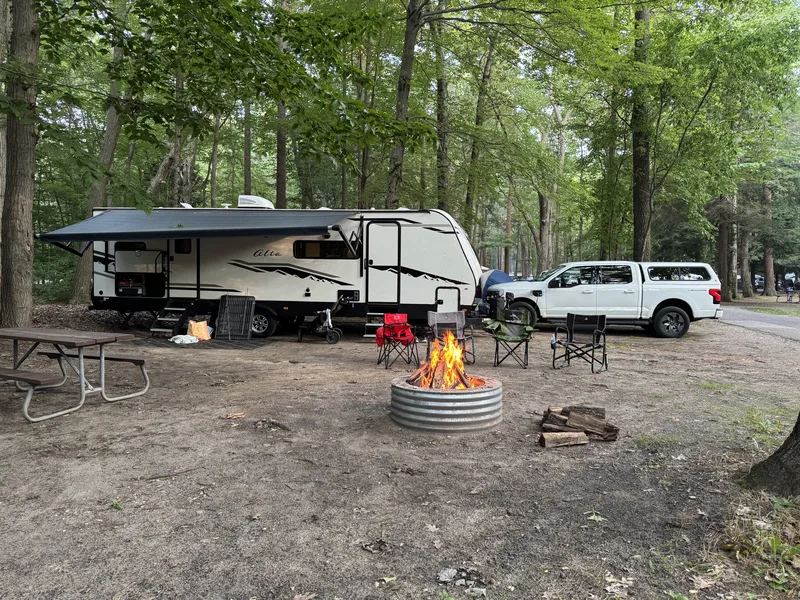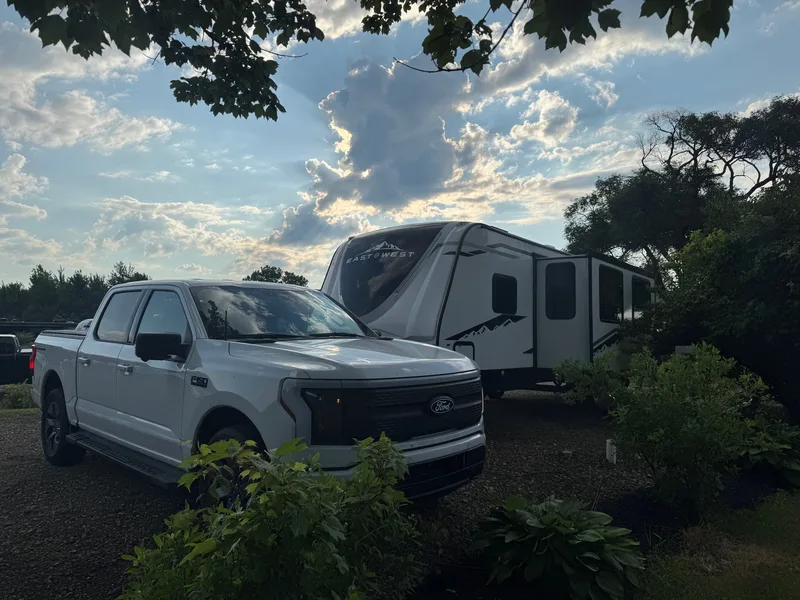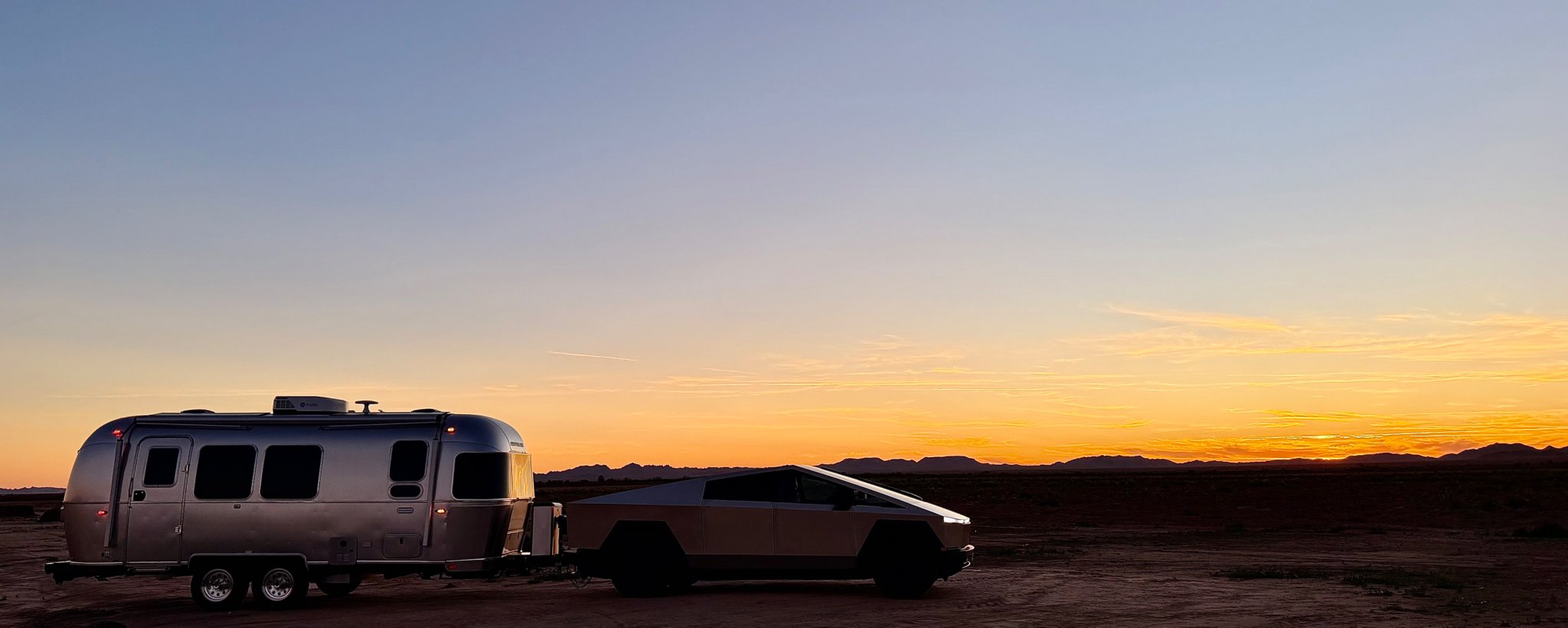
The Tesla Cybertruck offers a robust towing experience that in many ways redefines the capabilities of electric pickups, particularly in terms of ride and handling. The steer-by-wire system combined with four-wheel steering and expertly tuned suspension make the truck feel planted and agile, even under load, offering responsive, low-effort control that translates to superb stability on the highway and effortless maneuvering in tight spots, all while delivering a comfortable, vibration-free ride. Unlike many other trucks I've tested, including our Rivian R1T, where trailers transmit harsh shocks and jarring feedback into the cabin, the Cybertruck suspension and design feel more isolated, keeping the experience serene and composed, almost Cadillac-like in suppleness yet still firmly in command. I’m not exaggerating; it rides very nice, even while towing. As expected with Tesla the premium sound system provides an immersive, high-fidelity audio backdrop, and the Tesla mobile app stands in a league of its own with lightning-fast, feature-rich remote control everything from adjusting ride height for easy hitching to operating the tonneau cover or inverter from your phone adds genuine convenience and utility.
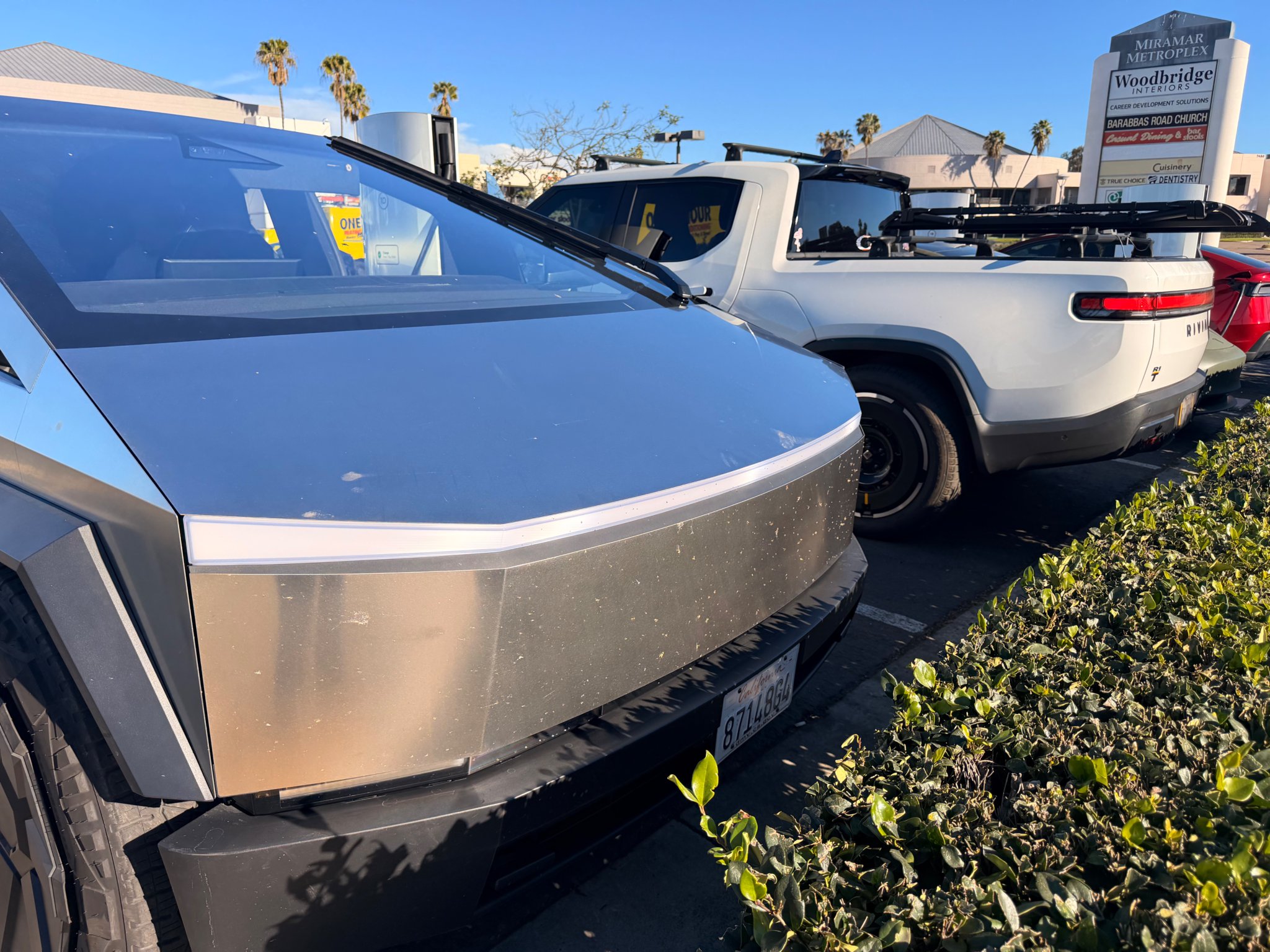
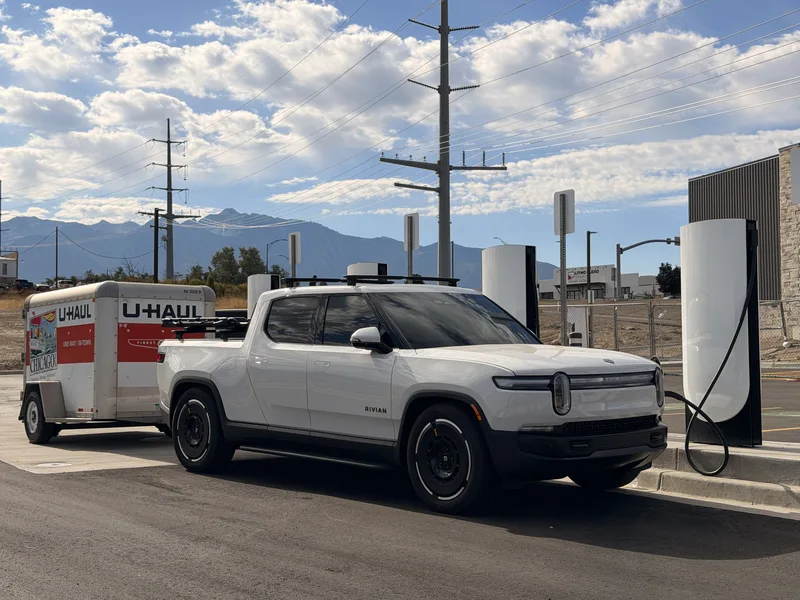
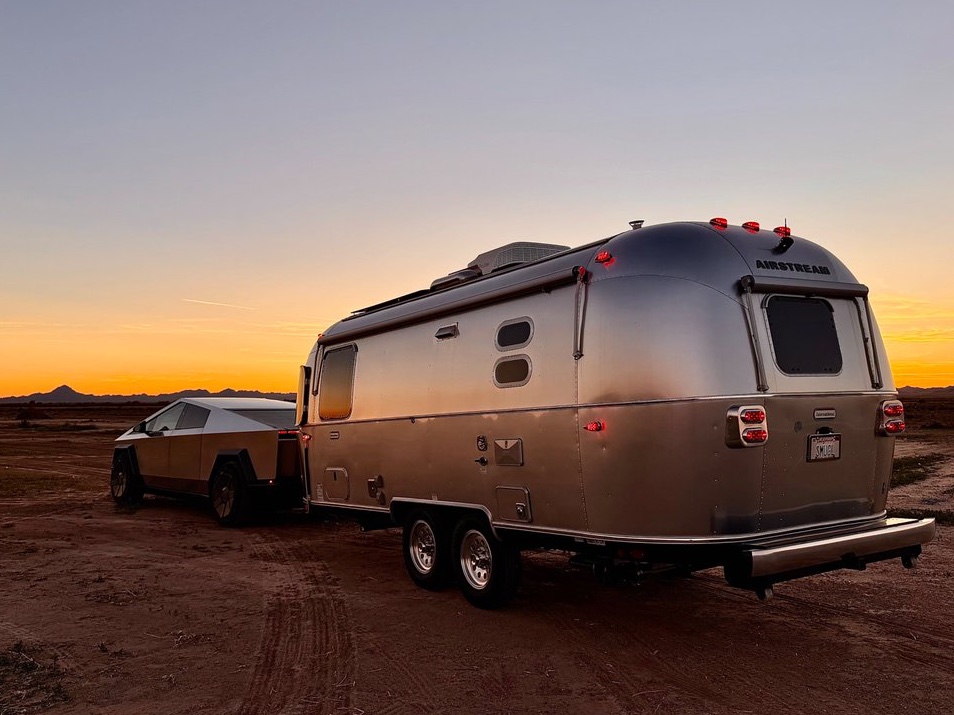
That said, towing with the Cybertruck reveals some notable trade-offs compared to competitors like the Rivian R1T. Visibility remains a persistent challenge, despite getting used to it over time, it’s still terrible. The camera positioning and rear views make tasks like precise hitching more difficult than they should be. Efficiency takes a meaningful hit while towing our Airstream, averaging around 850 Wh/mi, roughly 1.18 mi/kWh, which, with the ~122 kWh usable battery, yields an estimated real-world towing range of about 140 miles, shorter than ideal by a lot. A more efficient tire package could help. The rear-left charge port location exacerbates this, as it can force unhitching, and did, at Superchargers due to stall layouts and access issues; in contrast, we've DC fast-charged the Rivian 40+ times without ever needing to disconnect. The more frequent stops due to poor range, plus the hassle of unhitching, make long-distance towing feel less seamless, despite the Cybertruck's many strengths in dynamics, comfort, and tech integration.
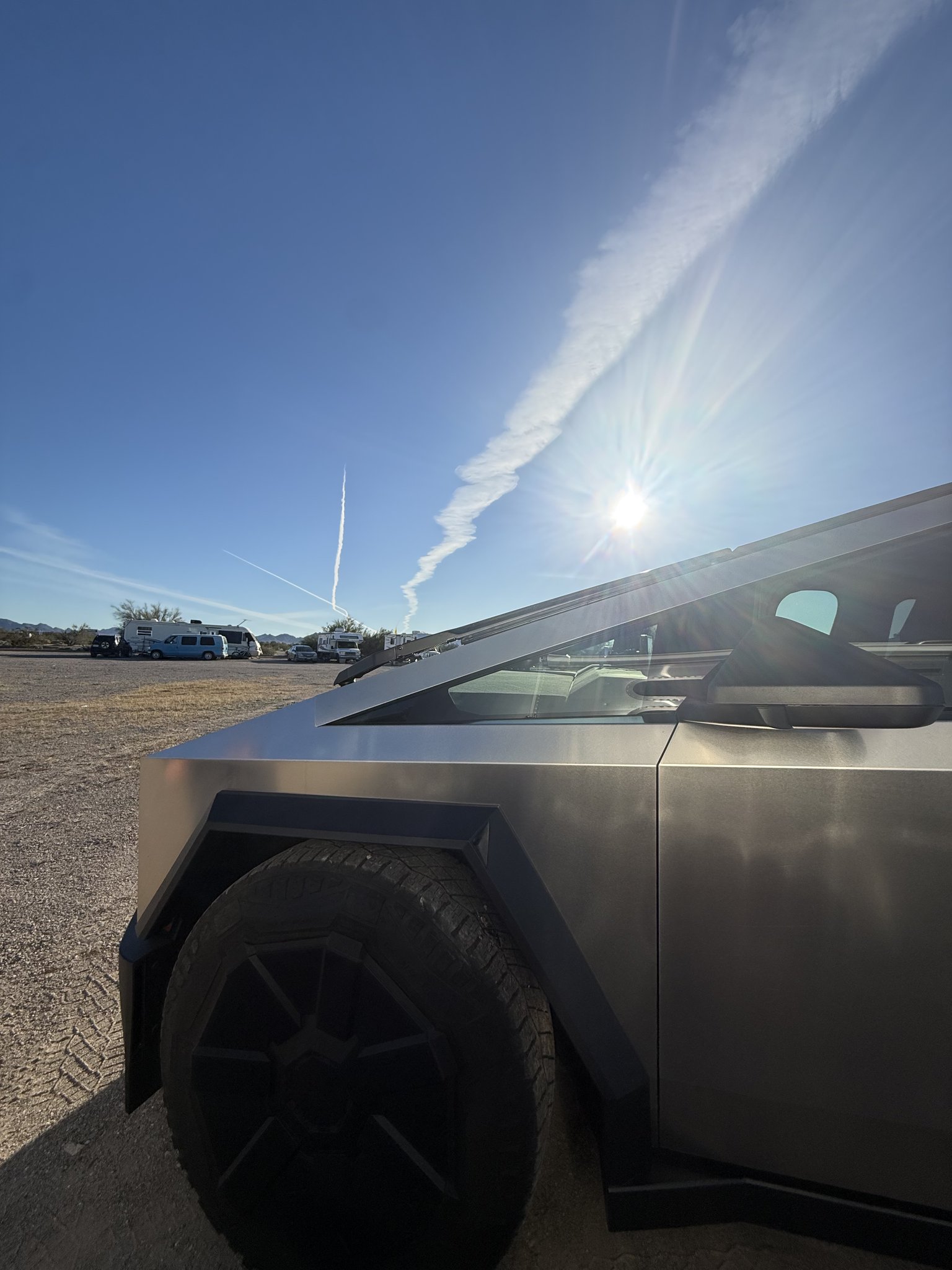
This blend of standout highs and practical frustrations makes the Cybertruck a compelling yet evolving choice for people who need a truck for truck stuff but tow often or far.
Comprehensive Cybertruck Towing Review vs. Rivian R1T
Driving Experience: Ride Quality, Handling and Maneuverability
Fantastic while towing with a much more isolated cabin experience than our R1T. As mentioned above, the suspension felt supple, almost Cadillac-like yet still planted and firmly in-command. The trailer felt isolated; it didn’t send any vibrations or shock through the cabin even while using our same hitch setup that we use on the R1T. Overall, this significantly improves the positive towing experience. Some of this comes down to the fantastic steer-by-wire system, making it so the driver is not holding a steering wheel that is physically connected to the steering rack.
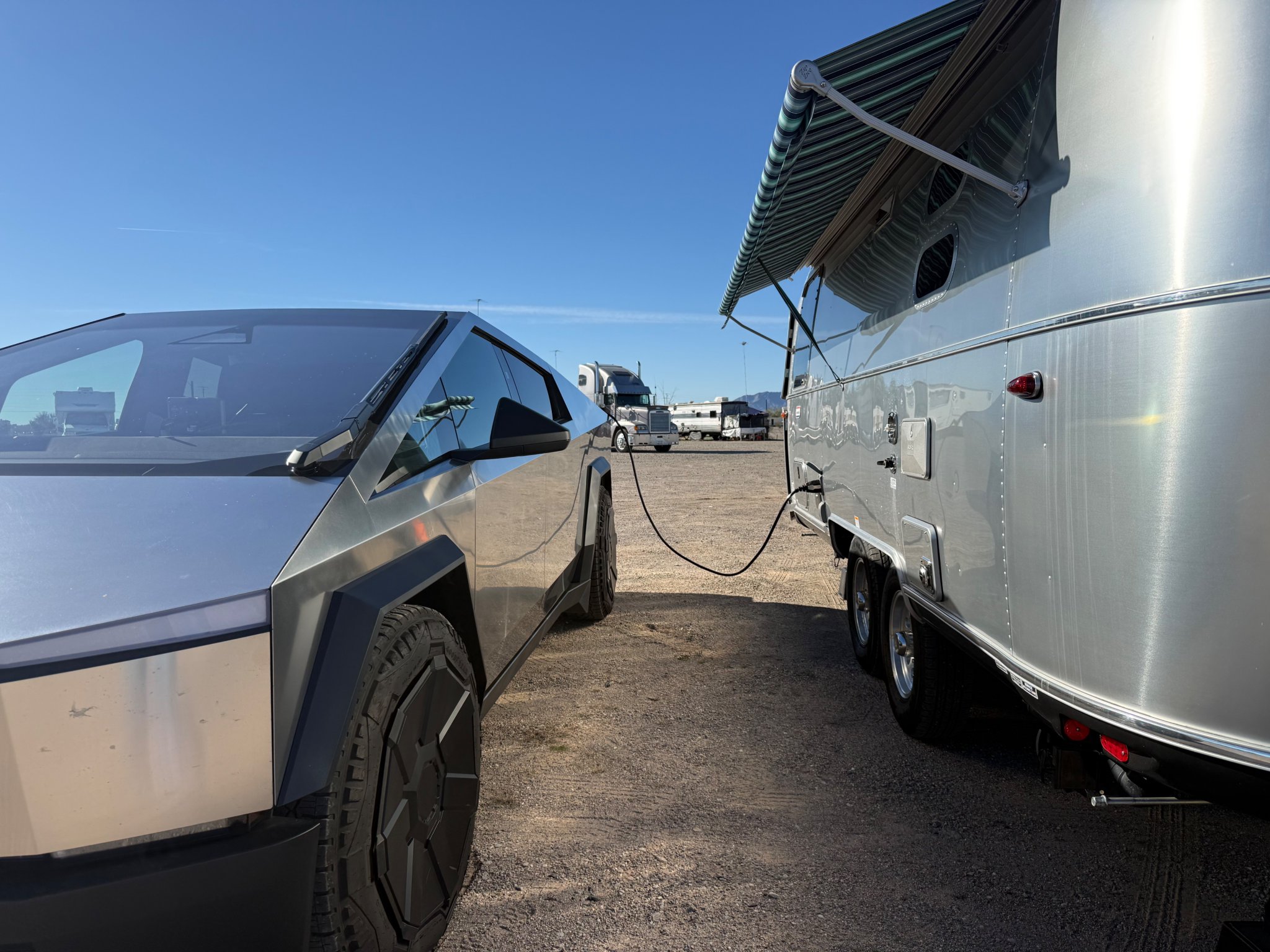
The 4-wheel steering combined with variable steering ratio enabled by steering-by-wire, make getting our trailer in and out of tight spots much easier, only let down by the poor visibility. Honestly all trucks should have 4-wheel steering, it is so good.
Tesla does not make slow or boring vehicles despite what the haters say. The Cyberbeast is a blast to drive, but more than that, in typical Tesla fashion the pedal mapping is spot on, roll off regenerative braking is exactly how you expect and it just wants to be driven. I do wish the regenerative braking was even stronger towing. I enabled the additional regen for towing but it still comes up a little short compared to Rivian which has very strong regen.
As far as visibility goes, I found the rear camera system, in terms of both quality and position, to be less than ideal for hitching up the trailer. Our previous Ford F150 and our Current R1T are way better for getting the ball under the hitch first time, every time. The image on the CT backup camera flattens the image quite a bit at any zoom level. It’s fine, I’m sure you get used to it, but its not as good as the competition in this area.
Mobile App Experience
Tesla mobile app is in another league and always has been, far superior overall. Rivian mobile app is great and continues to get better, but Tesla's app is much more feature-rich, and responsive.
Key Tesla advantages for towing/ownership:
Adjusting suspension ride height remotely from outside the vehicle is super useful for hitching and unhitching as well as loading. It’s also very impressive how fast the Cybertruck raises and lowers.
Use summon to move the vehicle after lowering remotely and unhitching.
Turn the inverter on/off remotely, power the Airstream, tools, campsite needs, etc.
Operate the tonneau cover remotely, open/close the bed cover from your phone, handy for access while towing or at stops.
App is super fast and intuitive, quick response times, seamless integration with vehicle features.
The remote control capability makes daily towing/ownership feel more convenient and ahead of the curve compared to Rivian.
Let’s Talk DC to AC Inverters for a Minute
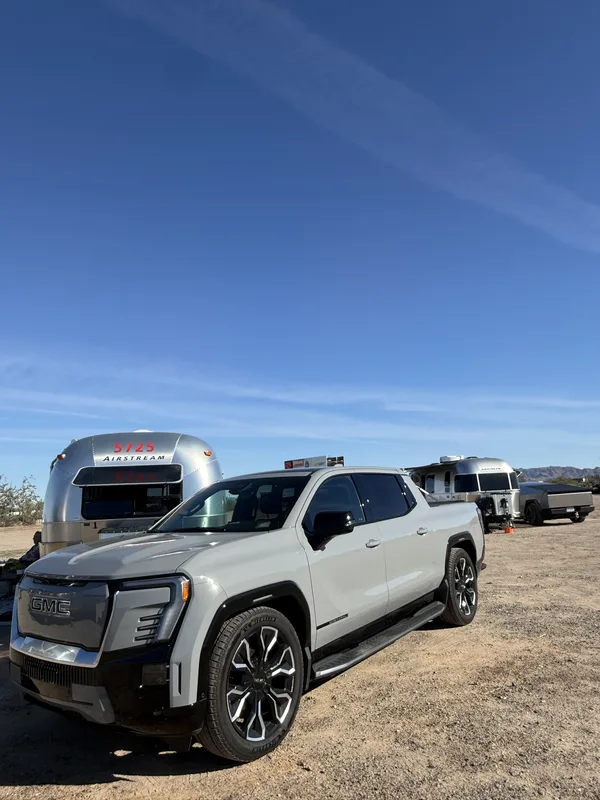
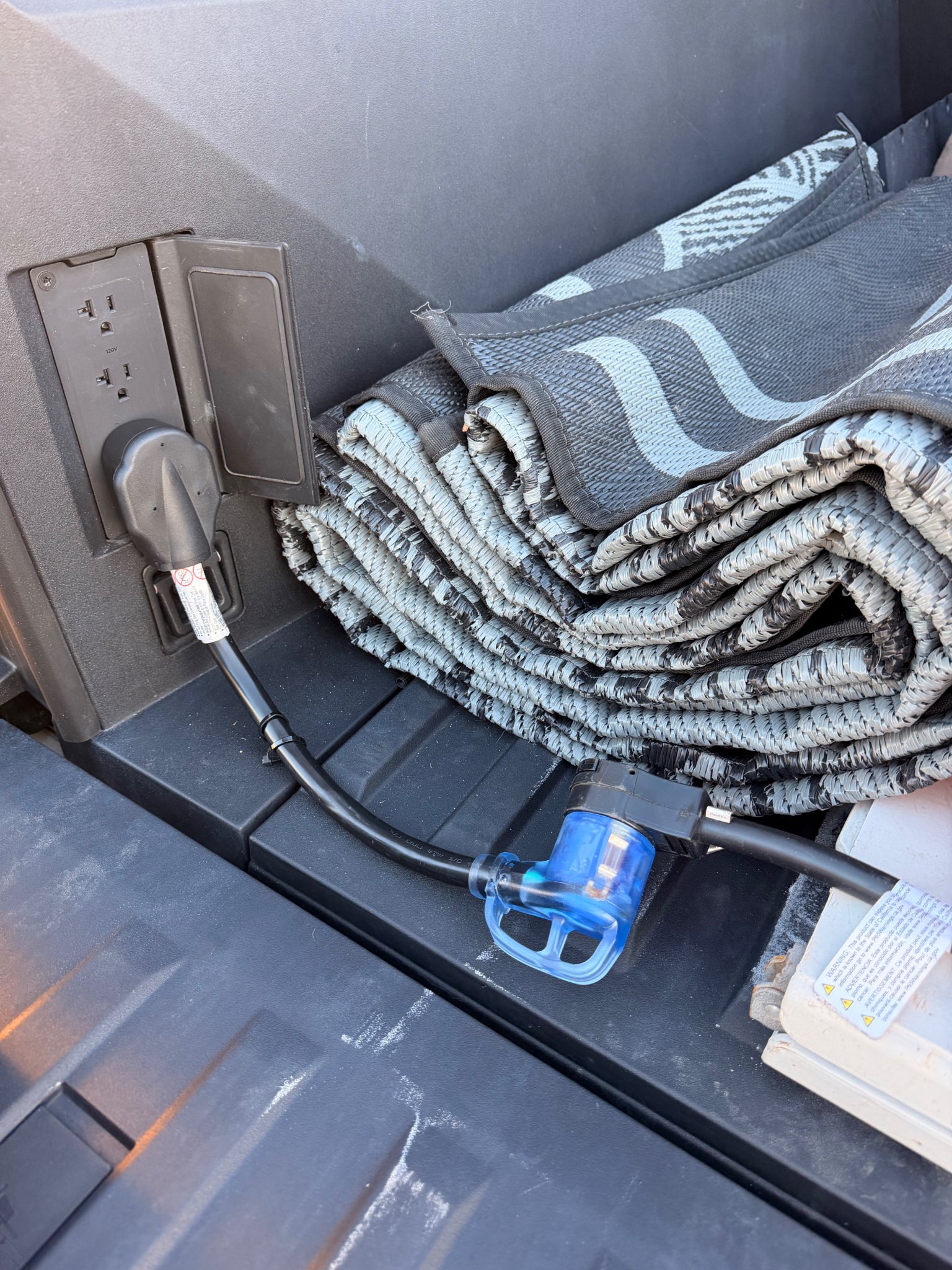
Power output from the DC-AC inverter is fantastic and delivers strong, reliable AC power, up to ~9.6 kW total across outlets: 120V cabin/bed + 240V bed, great for boondocking, off-grid camping, or towing utility scenarios. This trip was designed with this in mind. We were going to meet the Airstream club at a massive RV show in Quartzite, AZ where we would have no power and no hookups.
Power for days!
The Cybertruck could power almost everything we needed, just not all at the same time. However we had access to the Airstrams heatpump every night, we could make coffee without breaking out the French press, and everything worked. If we turn the coffee machine on with the heat pump running and one other appliance, we exceeded what the cybertruck could handle, and in this scenario, we would actually have to go into the cyber truck and reset the outlets on the touchscreen after unplugging everything otherwise it wouldn’t reenable from the app. Let’s just say it has a lot of power. It made off grid camping incredible.
One minor complaint is the 12-hour runtime limit when enabling "Keep Outlets On", via Controls > Outlets & Mods, for unattended/continuous use, e.g., powering a fridge overnight without being in the vehicle.
After 12 hours, or if battery drops below 5%, the outlets automatically shut off to protect the high-voltage battery.
I couldn’t find a way to renew the time limit like you can with Rivian, although the Rivian inverter is garbage compared to Cybertruck. We had to manually turn the feature off and back on, via touchscreen or app, but this cycles power; everything connected shuts down briefly and restarts, which can be disruptive. Also you have to remember to check your time remaining before going to sleep or you might lose power in the middle of the night, and it gets cold in the desert!!
Headlights
Can we just be honest? Cybertruck headlights suck compared to R1T matrix lamps. They are not even close. The auto highbeams were turning on and off so much on country roads I thought I might have a seizure, and even turning high beams on when a car was coming or in front. Cybertruck lacks full matrix, pixel-level adaptive, headlights; hardware may support more, but full adaptive matrix features are absent.
Quartzite, AZ
Rivian matrix lights never fail to impress. Rivian R1T features full matrix LED adaptive headlights / Adaptive Drive Beam technology, individually controllable LED segments that dynamically dim specific parts of the beam to avoid blinding oncoming traffic while keeping high beams on longer, adapt to curves, create shadows around other vehicles, and improve visibility in fog/rain without glare. This provides superior night driving and towing safety/experience, better forward visibility on dark roads, reduced glare for others, quicker response to traffic. While Tesla offers this on other models in the lineup none are as good as Rivian’s. I might not normally focus on this as much, but we tow at night a lot so its a key focus for me, in fact we pulled about half of the 600 miles we did with the Cybertruck at night.
In terms of towing, it is frustrating that headlights don’t automatically turn on when a trailer is plugged in. For those that don’t know, most modern trailers and RVs with backup cameras work off the same circuit as the running lights. So with Cybertruck, you must manually force headlights on to power trailer lights + camera. That sounds like a pretty small thing, but the truck doesn’t like being out of auto mode so it constantly switches itself back to auto mode meaning you lose your trailer lights and cameras and if you leave it in the "on" position, it’s constantly alerting you on the dash that the headlights are on.
In auto mode it should just detect that the seven-way trailer plug is plugged in and turn the running lights on. It would solve this problem completely. Rivian R1T automatically turns lights on when the 7-way is plugged in for seamless trailer light & camera activation. It’s a little thing, but it’s definitely a quality of life benefit if you tow a lot.
Navigation and Charging Experience: Superchargers While Towing
Tesla’s navigation is easily best of breed. Even trying to route to Superchargers appropriate for towing. The problem is the lack of suitable pull through chargers and a charge port in a highly sub-optimal location.
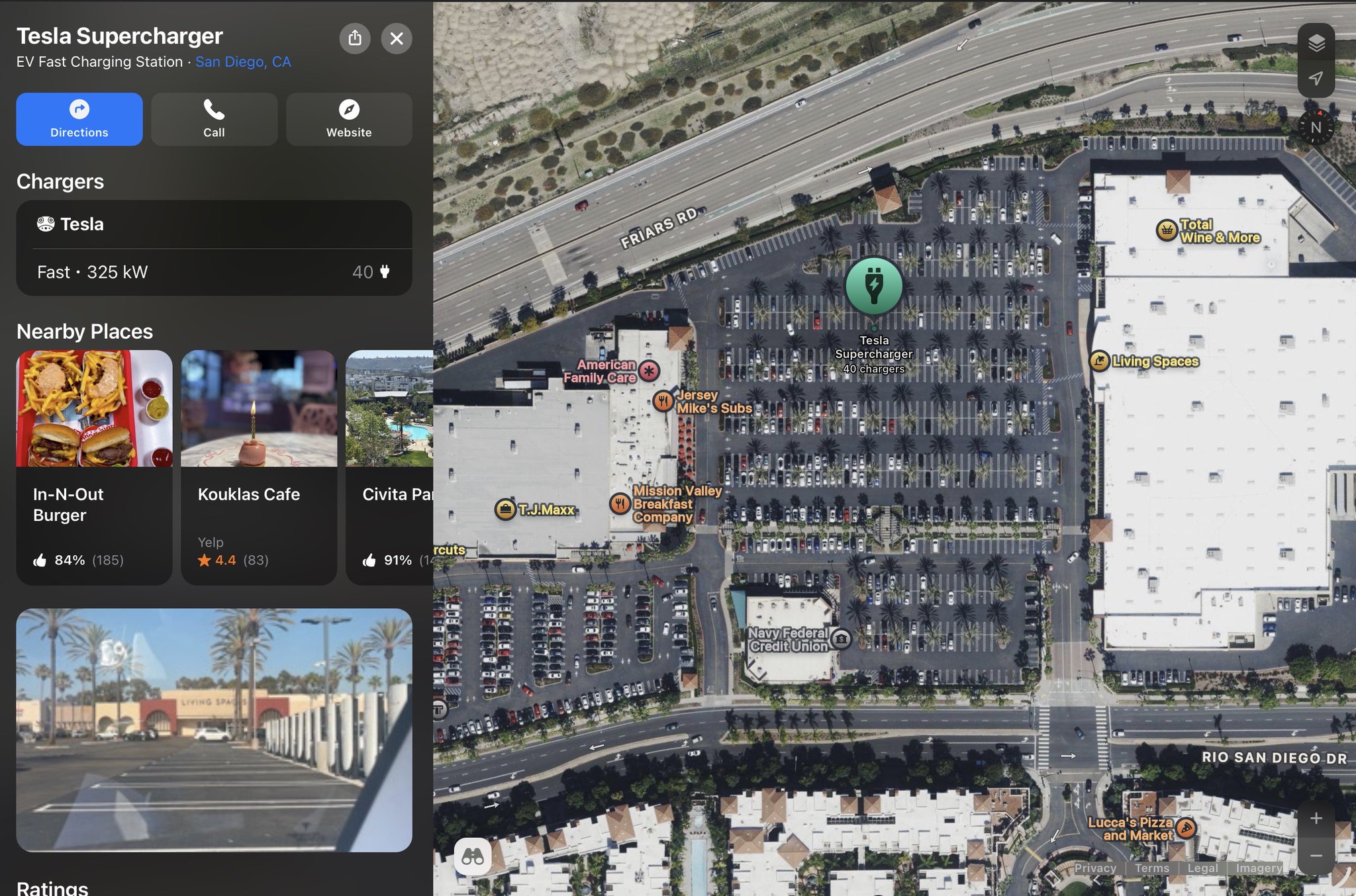
Starting our trip, we were surprised the Cybertruck wanted to charge before leaving San Diego proper. The first supercharger was perfect. x40 v4 325kw capable chargers with a layout that allowed for MANY charging options without blocking anyone or needing to unhitch.
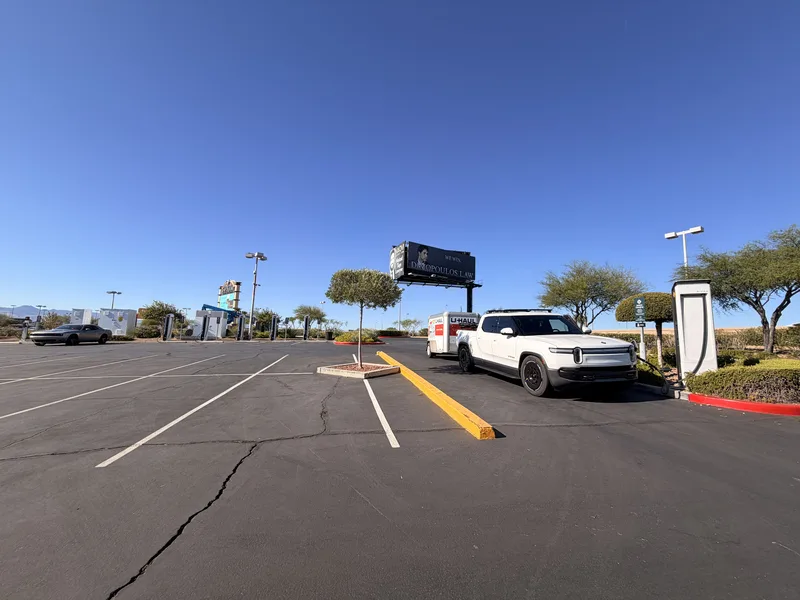
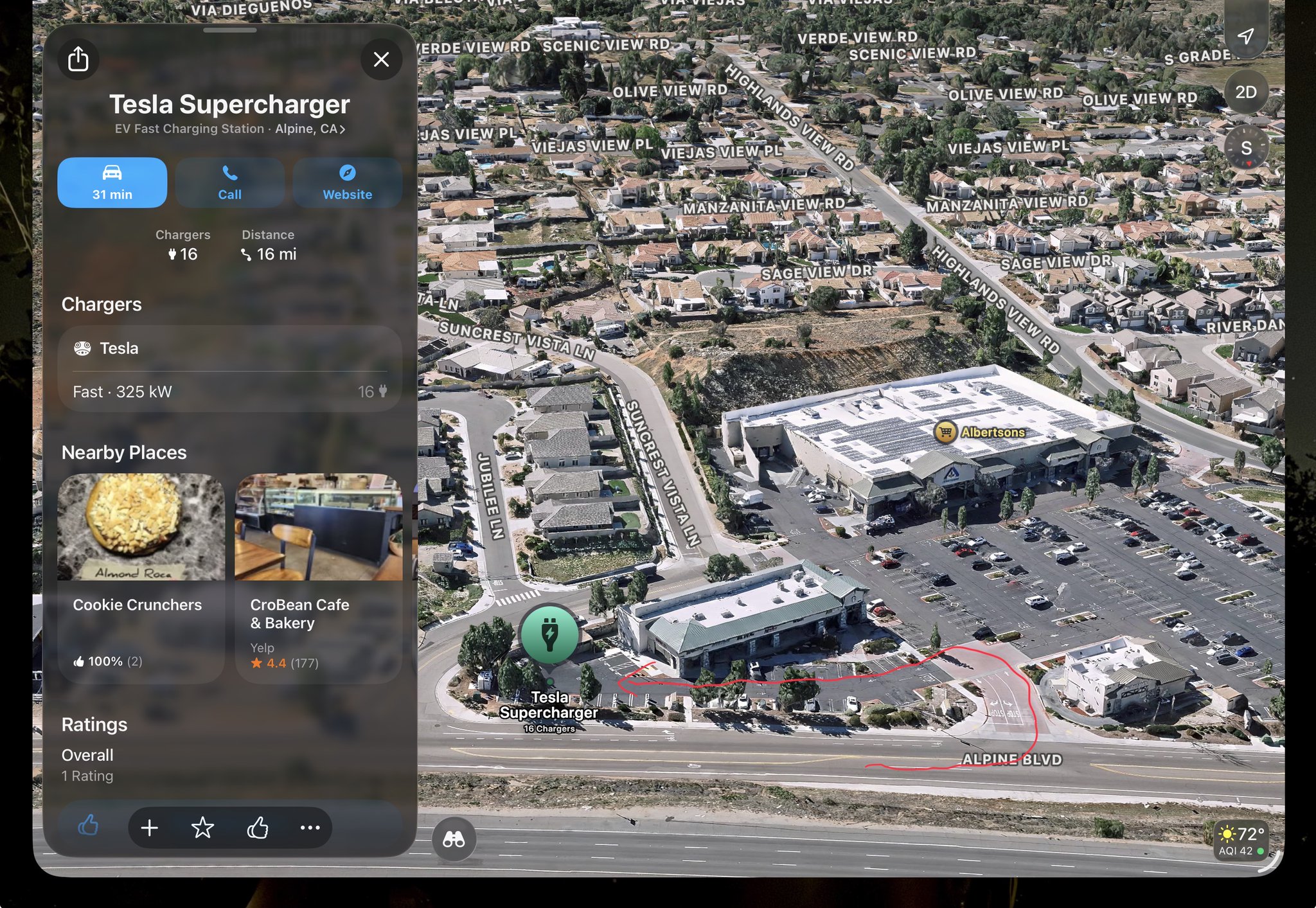
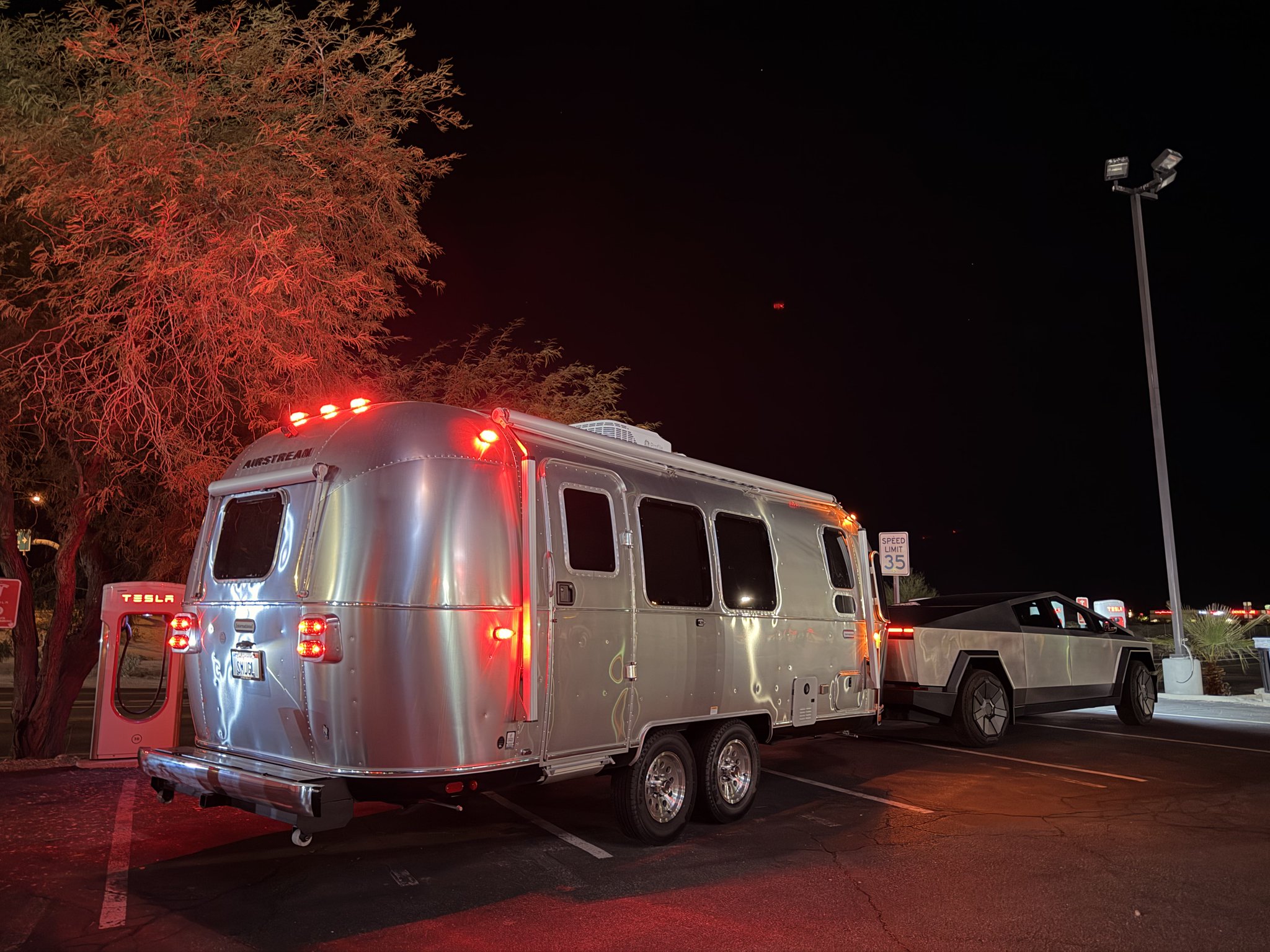
The second supercharger stop came way sooner than we were expecting. However this time, the Cybertruck routed us to a charger that was the only option and Impossible to access without unhitching due to the charger location/layout, tight/back-in only, no suitable pull-through or drive-forward option. I could have done it but would have needed to block many chargers OR regular spots in a parking lot that was full.
This highlights inconsistency in Supercharger station designs. Very few are towing-friendly, many require unhitching with the Charging port placement at the rear of the Cybertruck, which adds hassle, time, and potential inconvenience on longer trips.
Rivian's front-left chargeport has allowed us to charge over 40 times on the road over the past three years without having to unhitch even once.
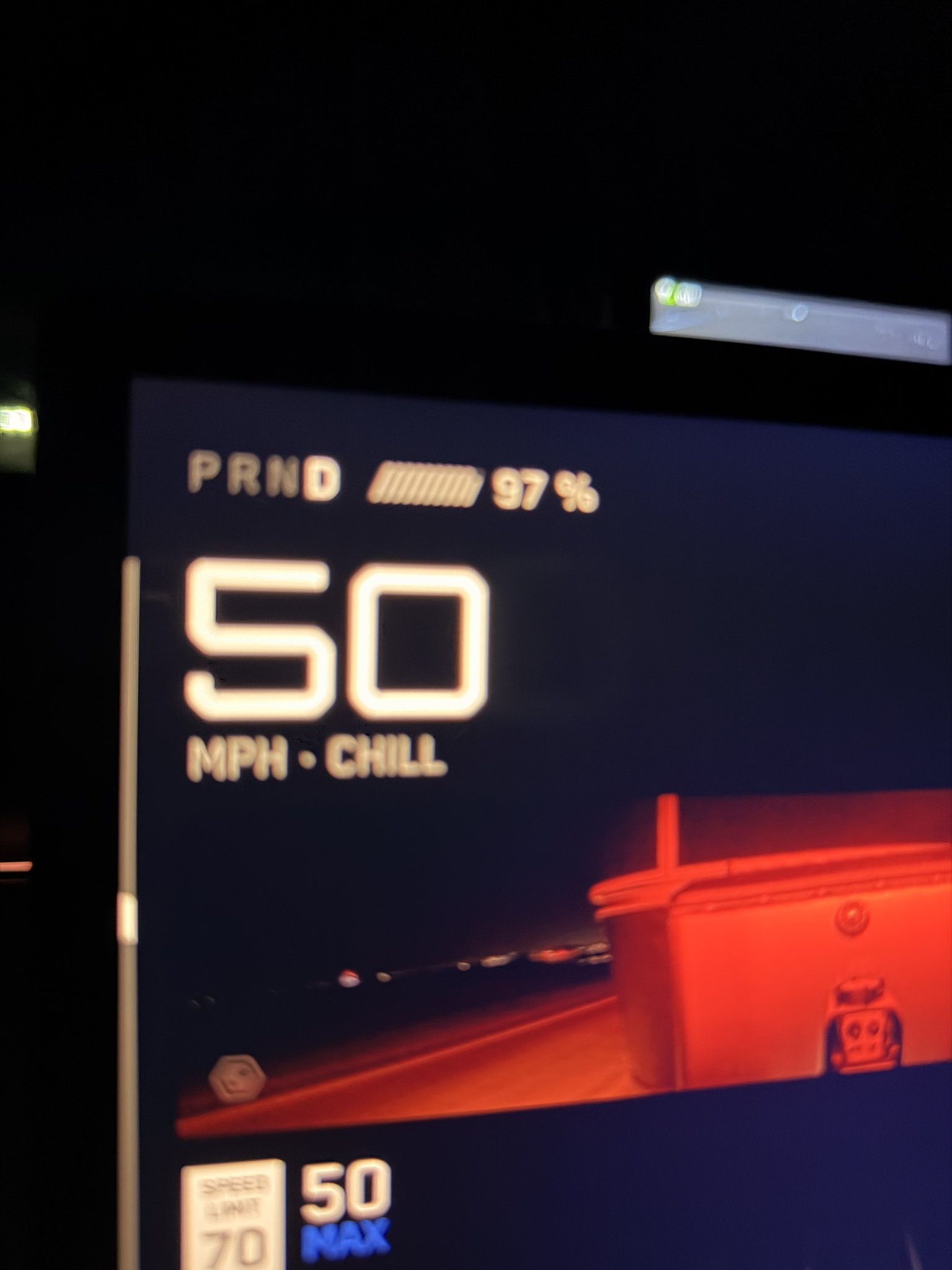
On the return trip from Arizona back to San Diego on the I-8 the Cybertruck wanted to stop in Alpine again, after leaving El Centro at 100%. After having to unhitch on the way out knowing how busy and tight that parking lot is I decided to try to hyper mile it. We clicked remove all charging stops and the Cybertruck expected we would make it home with -10%. I set the cruise at 50MPH and committed to making the return 109 miles with lots of elevation in 2 hours. We arrived with 38%!!!! So the BMS is wonky with towing, it doesn’t properly account for the load, speed etc. Even when I knew we would have plenty left, I just kept it at 50 to see how efficient it could get towing.
She goes pretty far if you seriously commit to Hypermilling.
Autopilot / FSD Integration with Towing and the 7-Pin Connector
When the 7-way is plugged in, the truck should automatically default to the standard Autopilot stack before putting it in drive, for compatibility and safety while towing.
Instead, it stays on the Full Self-Driving (FSD) stack by default, but doesn't allow activation of cruise control or other features until you manually stop, go back into park and turn off FSD to enable towing-compatible cruise control. However, once it is enabled, it’s nice that Tesla has traffic aware cruise control where Rivian does not slow down for vehicles in front of you when towing.
Towing in the middle of the night, means low utilization chargers are wide open.
This creates unnecessary steps and frustration at the start of a tow if FSD isn't supported/optimized for towing, due to trailer dynamics, weight, etc., the system should intelligently detect the 7-pin connection and auto-default to the lower/safer Autopilot stack if the trailer weight profile is over what FSD supports.
Towing Efficiency and Range Comparison vs. Rivian R1T While Towing Airstream
Efficiency and Range Deep Dive: Our Real-world towing with our Airstream International 23ft, 6000lbs, trailer shows Rivian R1T, Max Pack, outperforming Cybertruck in efficiency, leading to better range despite similar use cases.
Normalized data: Rivian averaged 1.35 mi/kWh, equivalent to ~741 Wh/mi; Cybertruck averaged 850 Wh/mi, equivalent to ~1.176 mi/kWh.
I am being generous, at the end of an almost 600 mile trip, trip A was reset when we picked it up, was showing 824.8 Wh/mi after driving it for about 20 miles without towing and 109 miles of towing at 50 MPH purely hypermiling it. We typically tow between 55-65 MPH so the Cybertruck is probably closer to 900Wh/mi with our Trailer and typical elevation change but I want to be beyond fair.
Battery capacities: Rivian Max Pack = 140-141 kWh usable; Cybertruck ≈122 kWh usable, ≈123 kWh total per recent specs/EPA filings.
Calculated towing range, assuming full charge, no reserves, and consistent conditions like speed, terrain, weather: Rivian ≈190 miles; Cybertruck ≈140 miles.
A Couple Quick Notes
Some superchargers are straight awesome.
The rearview mirror is stupid, it should’ve been digital.
The sunvisor is remind me of the model X, but not engineered as well. Model X tucked in on the A pillar, providing an unobstructed view out of the huge windshield while the cybertruck reminds me of the lucid air which Tesla folks constantly criticize.
Brake controller integration & feel was easy to setup and use.
It’s a trade-off between futuristic driving dynamics and "truck-first" common sense. Not to mention the R1T gear tunnel is awesome.
Final Verdict
The Cybertruck is the better driving machine it’s smoother, quieter, and more maneuverable. But the Rivian R1T remains the better towing tool. Between the superior visibility, the matrix headlights, better charge port location and the significantly longer range, the Rivian makes the actual "work" of a long-distance trip much less stressful.
Bye.