
131 kWh extended-range planning basis
First-hand notes
Ford F-150 Lightning towing range notes
The Lightning is the familiar-truck comparator. It feels closest to a traditional half-ton pickup, but its towing route plan lives or dies on battery size, trailer shape, and charger spacing.
- Evidence
- First-hand towing notes plus trip photo evidence
- Pack basis
- 131 kWh extended-range planning basis
- Airstream estimate
- 131 mi full pack
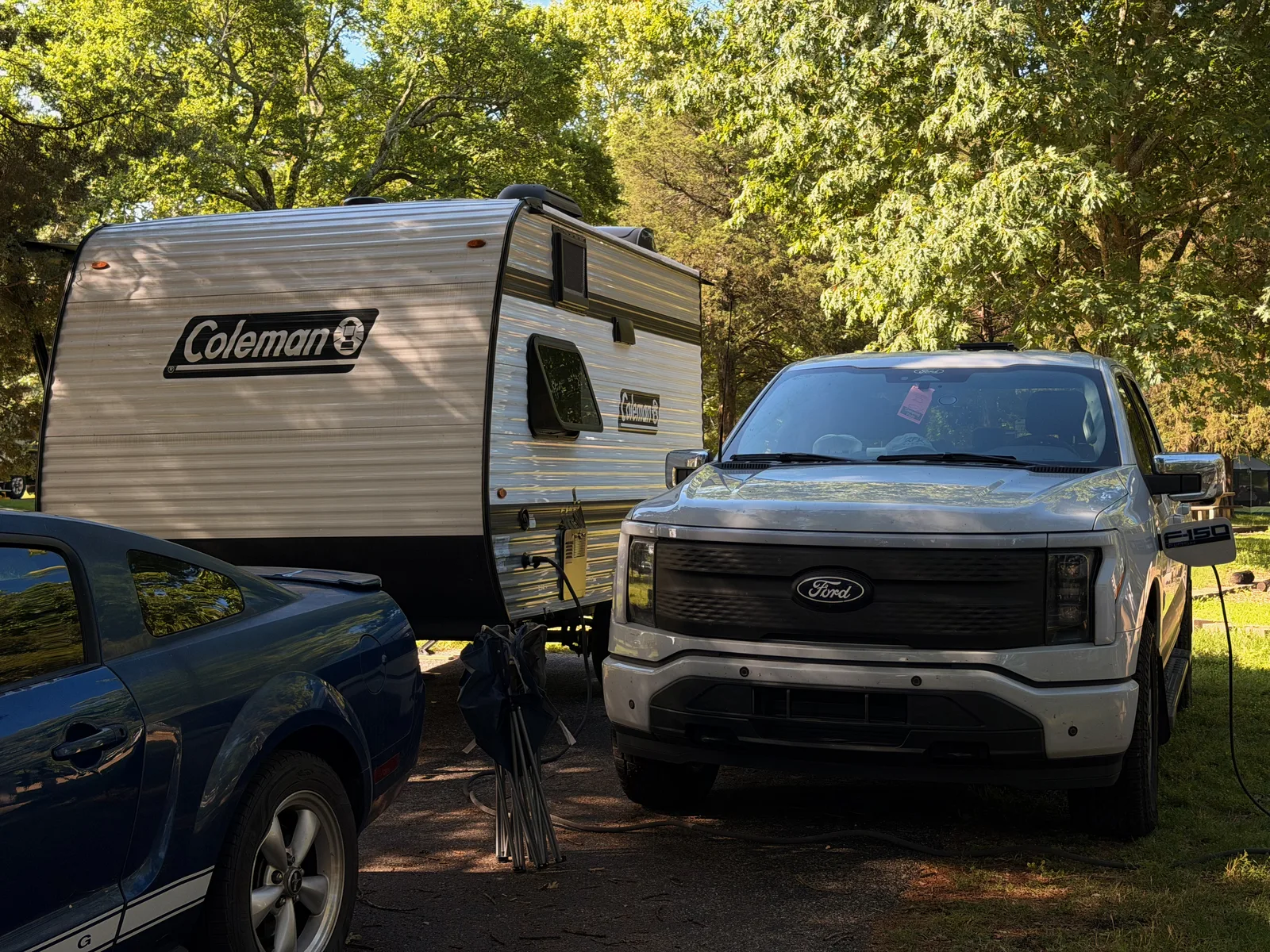
Guest field report
I towed an 8,000-pound camper over 1,700 miles with my Ford F-150 Lightning. Here's what I learned.
After towing our 32-foot, 8,000-pound camper from Napoleon, Ohio, to Branson, Missouri, and back with my Ford F-150 Lightning, I can confidently say the reality is much more interesting than the headlines.
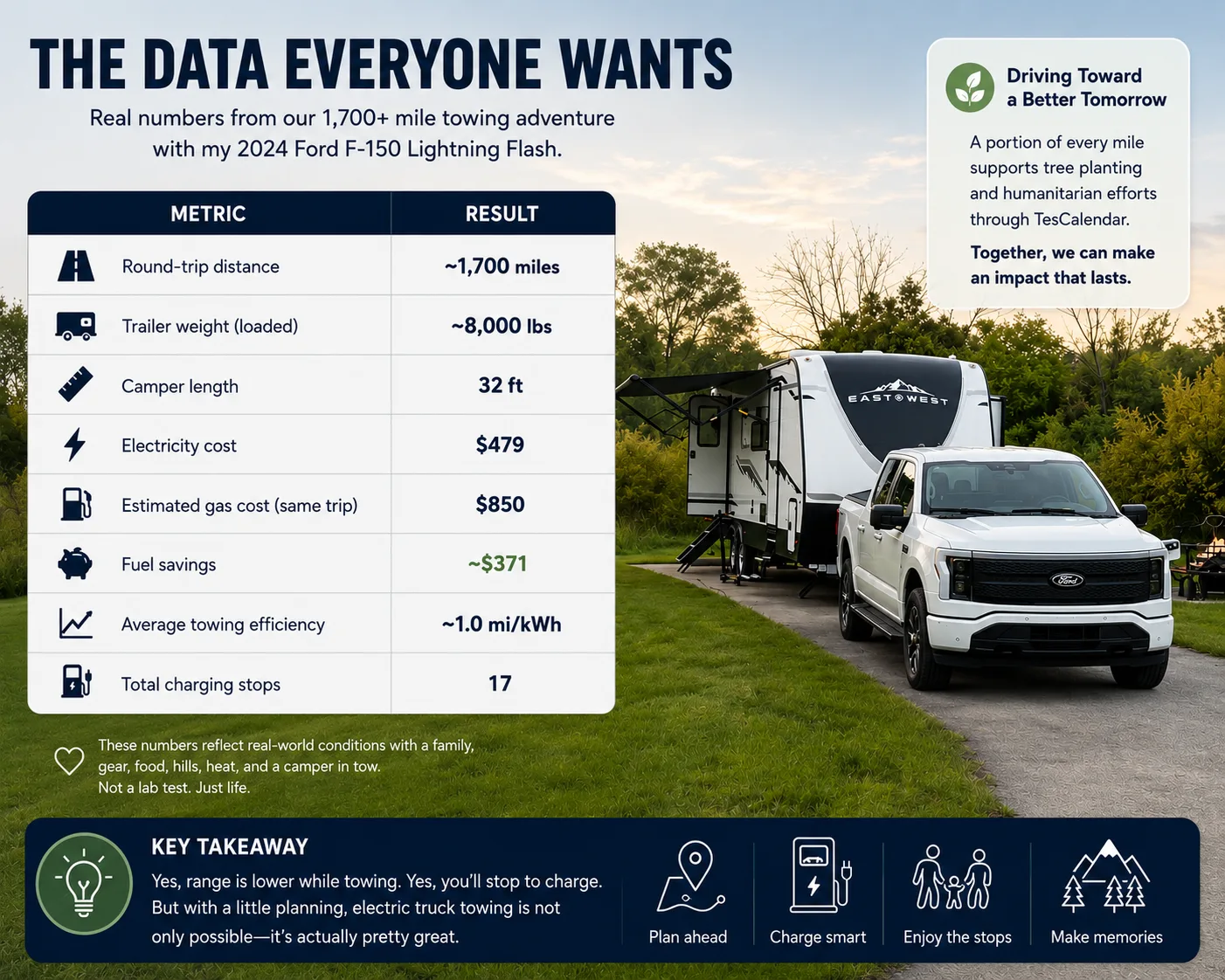
The data everyone wants
Real numbers from a 1,700+ mile towing trip with a 2024 Ford F-150 Lightning Flash.
| Round-trip distance | ~1,700 miles |
|---|---|
| Trailer weight (loaded) | ~8,000 lbs |
| Camper length | 32 ft |
| Electricity cost | $479 |
| Estimated gas cost (same trip) | $850 |
| Fuel savings | ~$371 |
| Average towing efficiency | ~1.0 mi/kWh |
| Total charging stops | 17 |
These numbers reflect real-world conditions with a family, food, hills, heat, and a camper in tow. Not a lab test. Just life.
If you spend any time on social media, you've probably seen the headlines. “Electric trucks can't tow.” “They only go 100 miles.” “They're useless for camping.”
Was it different than towing with a gas truck? Absolutely. Was it difficult? Not at all. In many ways, it was actually the most enjoyable towing experience I have ever had.
The trip
Our family loaded up the camper and headed nearly 1,700 miles round trip. The route included interstate driving, hills, city traffic, heavy rain, summer heat, campground maneuvering, and everything in between. This was not a controlled test. It was a real family vacation, exactly the kind of trip critics claim an electric truck cannot handle.
Towing performance is outstanding
The first thing everyone talks about is range. The first thing you will notice as the driver is torque. The Lightning produces 775 lb-ft instantly. No waiting, no downshifts, no engine screaming at 4,500 RPM while climbing a grade. Whether merging onto the interstate or accelerating around slower traffic, the truck simply pulls.
Even after years of driving pickups, the smoothness is hard to overstate. Ford’s independent rear suspension also keeps the truck remarkably composed compared to many traditional half-ton trucks. The trailer simply follows behind without constantly reminding you it is there.
Regenerative braking is a game changer
This was one feature I didn't fully appreciate until I started towing. Coming down long hills, regenerative braking captures energy while helping control speed. Instead of constantly moving between the accelerator and brake pedal, the truck naturally slows while returning energy to the battery. Combined with the trailer brake controller, it makes descending hills feel much more controlled and relaxed. After using regen while towing, it is honestly difficult to imagine going back.
The charging stops became part of the vacation
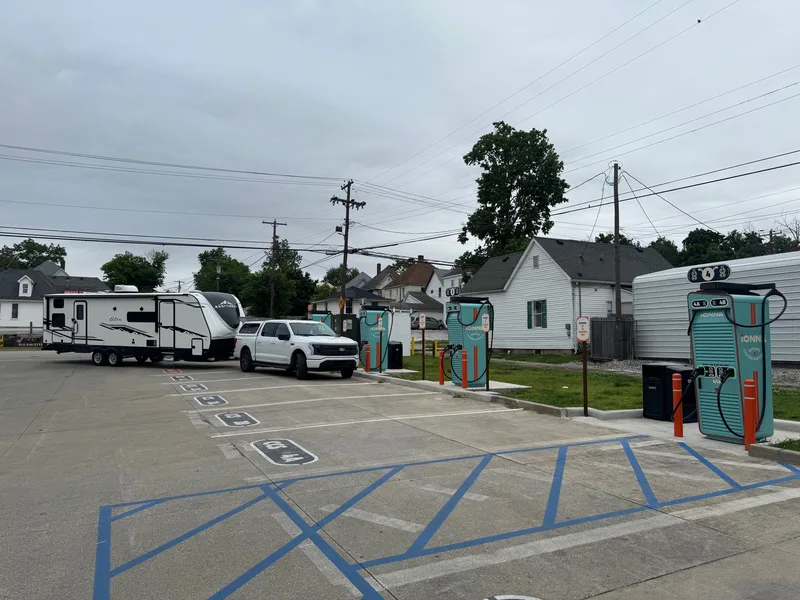
The biggest misconception is that charging means sitting around doing nothing. That was not our experience. Nearly every stop looked something like this:
- The kids needed a bathroom.
- Someone wanted food.
- We stretched our legs.
- Walked around.
- Grabbed snacks.
- Checked messages.
By the time everyone was ready to leave, the truck usually was too. Were there occasions where we waited a little longer? Sure. But those moments were far less common than many people imagine.
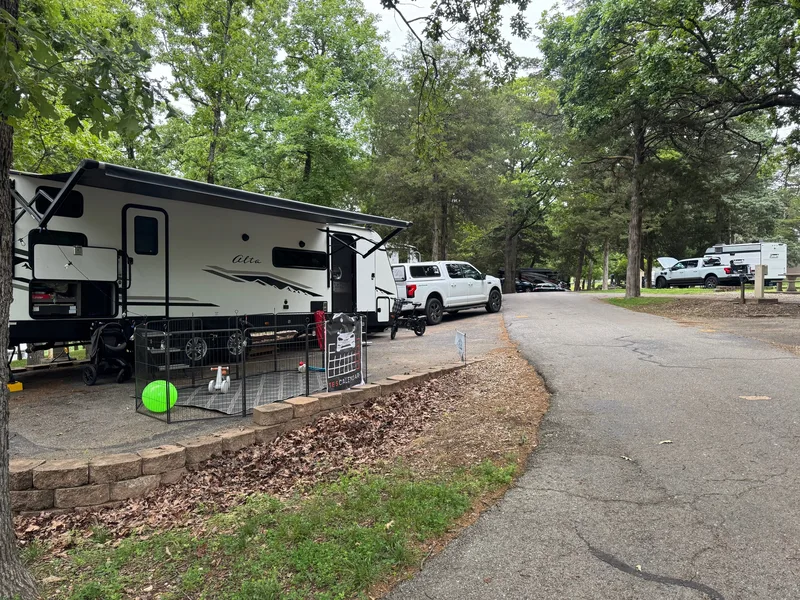
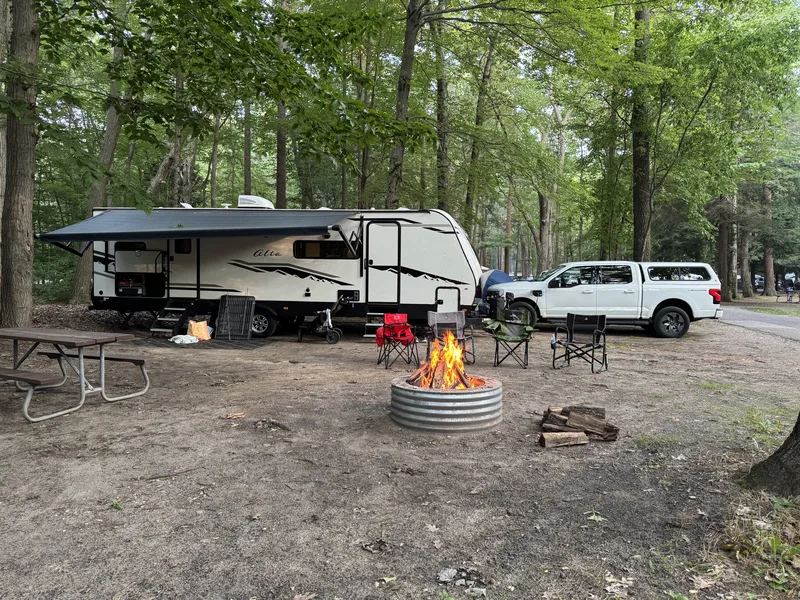
One of the biggest advantages of towing an EV is something that rarely gets mentioned: when we arrived at the campground, the truck didn't need a trip to the gas station before heading home. Like many RV parks, our campsite included electricity, so the Lightning quietly recharged while we enjoyed our vacation. By the time checkout rolled around, the truck was already fueled up and ready for the next leg. It is a subtle benefit, but after experiencing it firsthand, it is hard not to appreciate waking up each morning with a full battery instead of planning your first stop around finding fuel.
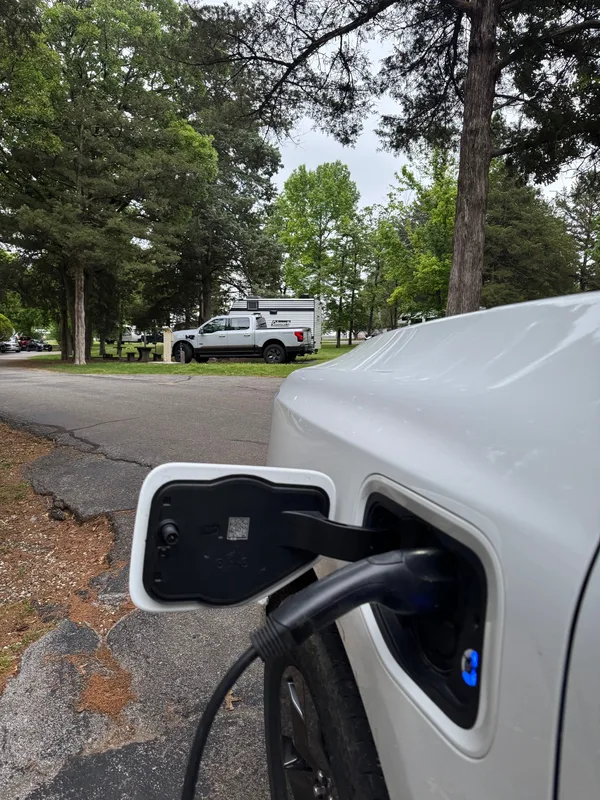
The biggest challenge isn't charging speed
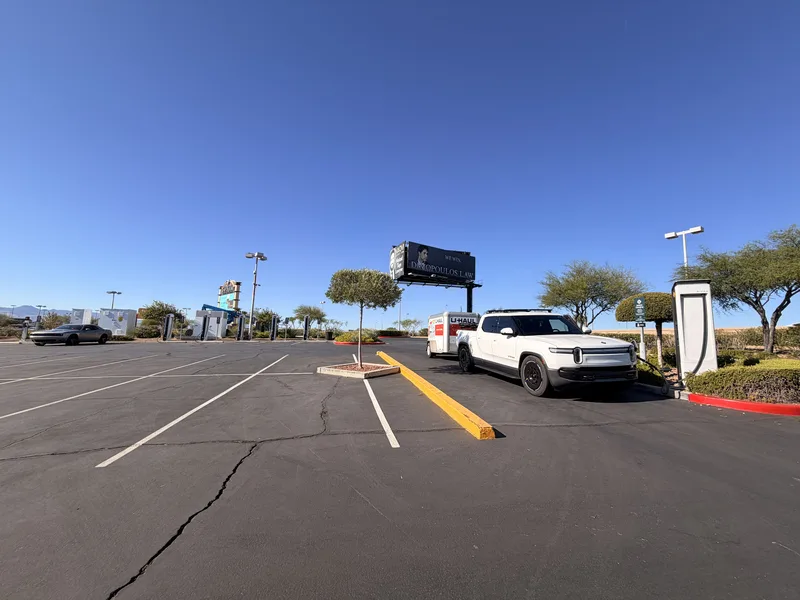
It's charger design. Most charging stations today were designed for cars, not trucks towing 30-foot campers. That means you'll occasionally need to:
- Unhook the trailer
- Park creatively
- Take several charging spaces
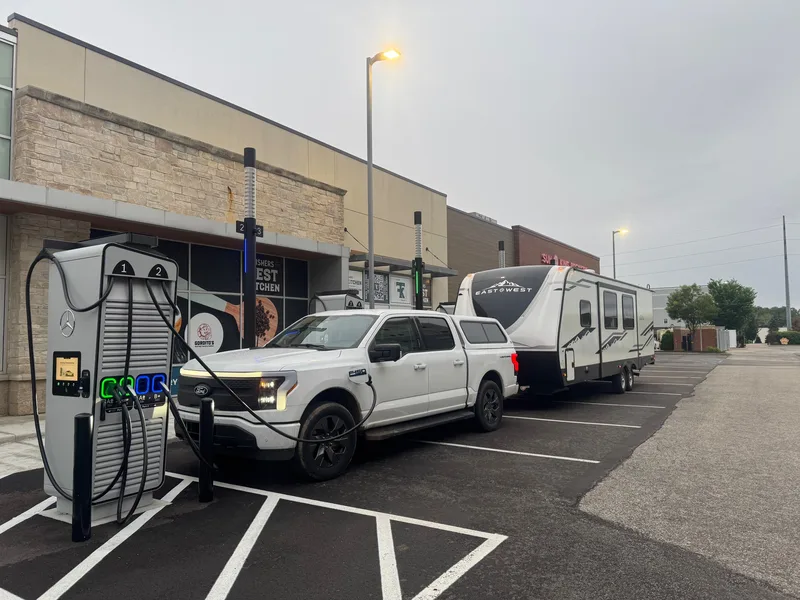
Fortunately, this is improving rapidly as companies begin installing pull-through chargers designed for towing. Once that infrastructure catches up, towing an EV becomes dramatically easier. On this specific trip we got really lucky and actually did not have to unhook once, thanks to the A Better Route Planner trailer-friendly setting and a front charge port. On a previous 2,100-mile trip from Ohio to Maine, we had to unhook at least four times.
The hidden benefits nobody talks about
People love debating towing range, but they rarely talk about everything else. During the other 95% of the year, my Lightning gives me:
- Home charging every morning
- Almost no routine maintenance
- No oil changes
- A massive powered frunk
- Extremely quiet driving
- Pro Power Onboard for camping and projects
- Instant acceleration every day
It is not just a great tow vehicle. It is an outstanding daily driver.
What I'd like to see improved
No vehicle is perfect. My wish list is pretty simple:
- More trailer-friendly charging stations
- More pull-through chargers
- Slightly faster DC charging
- An even larger battery option
That is honestly about it. The truck itself has exceeded my expectations.
Would I do it again?
Without hesitation. In fact, we already have. Every trip teaches us something new, and every trip becomes a little easier as charging infrastructure continues to improve.
Would I recommend a Lightning to someone towing 12,000 pounds across the country every week? No. That is still heavy-duty diesel territory. But for families who camp a handful of times each year and use their truck as a daily driver the other 350 days, I think the Lightning makes an incredibly compelling case. The internet loves to focus on what electric trucks cannot do. After nearly 1,700 miles towing our camper across multiple states, I came away thinking about everything this truck can do. And that is a much longer list.
A few things I learned along the way
If you're planning your first EV towing trip, here are my biggest takeaways:
- Slow down a little. Driving 65 mph instead of 75 mph noticeably improves efficiency.
- Don’t fear charging stops. Plan them around meals and bathroom breaks instead of treating them as delays.
- Use the truck’s built-in navigation. It is surprisingly accurate at predicting battery levels and suggesting charging stops. A Better Route Planner is also a really awesome route-planning app.
- Arrive at chargers with a little buffer instead of trying to maximize every mile.
- Don’t obsess over range. Once you settle into the rhythm of the trip, towing becomes surprisingly relaxing.
Final thoughts
I've now spent thousands of miles living with my Lightning, including one of the longest towing trips I have ever taken. Would I buy another one? Absolutely. Would I change anything? Sure, better charging infrastructure and more range would make it even easier. But every year, that infrastructure gets better. Meanwhile, the truck hasn't changed. It's been quietly proving that electric trucks are far more capable than many people realize.
Key takeaway
Yes, range is lower while towing. Yes, you will stop to charge. But with a little planning, electric truck towing is not only possible, it is actually pretty great.
Driving toward a better tomorrow: a portion of every mile supports tree planting and humanitarian efforts through TesCalendar.
Follow TesCalendar, an EV-towing creator worth your time
Watch the trip: “Towing Our Camper 1400+ Miles With An Electric Truck, Branson Edition” on his YouTube channel.
EV towing library
More EV towing stories
Field reports, truck comparisons, and the measured data, all in one place.
-
-
-
-
-
-
First-hand towing notes plus trip photo evidence
What we can say with confidence.
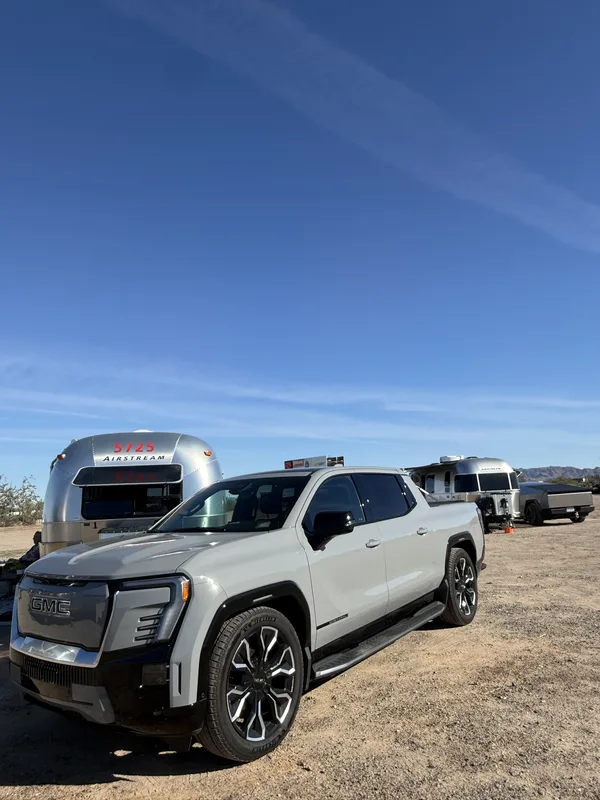
Wattreach has first-hand Lightning towing experience with the Plaid race car, plus trip evidence from Ford Lightning friends towing travel trailers into the Branson meetup.
- Official range: Up to 320 mi EPA-estimated range with the available 131 kWh battery
- Official tow rating: 10,000 lb with available Max Trailer Tow Package on Flash and Lariat
- Source: Ford F-150 Lightning specs
Estimate this pack's towing range.
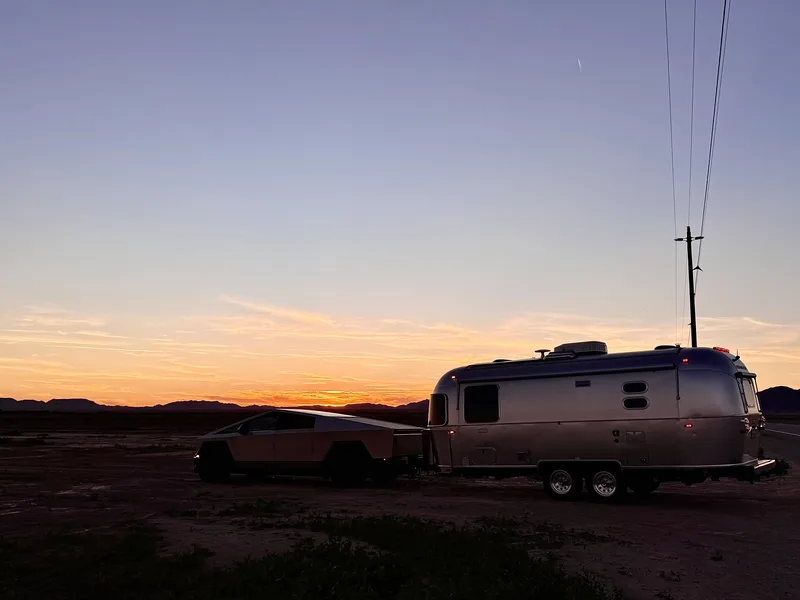
This is a planning estimate, not a measured F-150 Lightning tow ledger. The F-150 Lightning is a physically larger truck with a less aerodynamic shape and a less efficient motor and drivetrain than our R1T, so towing the same 23-foot Airstream it gives up real efficiency: we plan it at 1.00 mi/kWh, below the 1.24 mi/kWh our R1T measures across 5,262 towing miles. That estimate, multiplied by this truck's pack basis, is the math below.
131 kWh x 1.00 mi/kWh (truck-adjusted).
A realistic fast-charge hop before wind, grade, and arrival buffer.
Useful advantages.
- Familiar F-150 ergonomics and bed utility
- Strong tow rating with Max Trailer Tow Package
- Large frunk and practical work-truck shape
Range planning cautions.
- Standard-range trucks are a short-hop towing proposition
- The Platinum tow rating is lower than Flash and Lariat with Max Trailer Tow
- Ford charge-route planning is not the same advantage as Tesla or Rivian network routing
Take the data
Use the numbers. Link the source.
Plain-text citation
Wattreach. Real-world EV towing dataset: Rivian R1T Tri-Motor Max Pack towing a 23-foot Airstream International. 5,262 measured towing miles, 51 tow segments, 1.24 mi/kWh weighted average. https://wattreach.com/the-rig/