EV towing · weekend camping
The F-150 Lightning is built for the camping most families actually do.
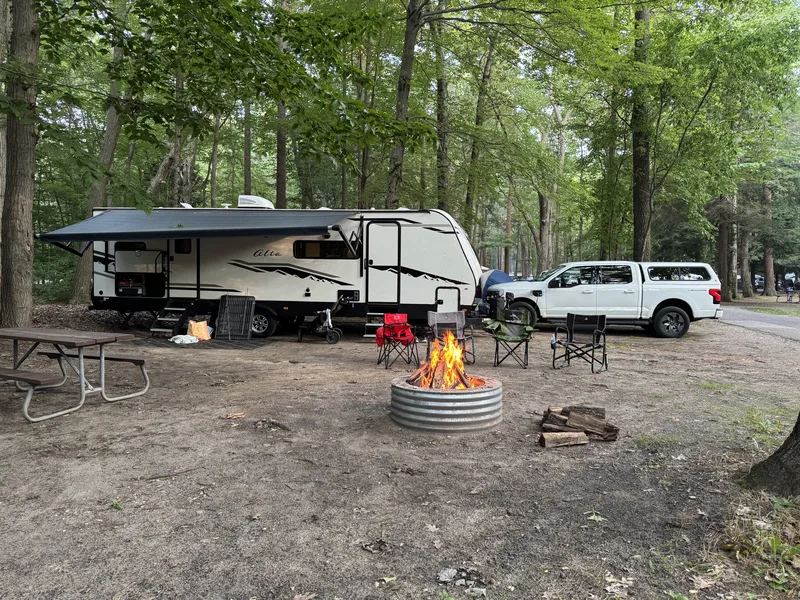
Cross-country EV towing gets all the debate. But most camping is a weekend an hour from home, and that is exactly where an electric truck pulls ahead. Here is a real one: a 2024 Ford F-150 Lightning Flash, a 32-foot camper, 65 miles to a state park, and not a single public charge.
Part of the Ford F-150 Lightning corner. Compare it on the EV truck towing comparison, or see our own Rivian + Airstream towing data.
Guest field report
Why the Ford F-150 Lightning is the ultimate weekend camping tow vehicle
When most people picture towing with an electric truck, they picture the challenges: charging, range, long road trips. But for many families, that is not what camping looks like. Most of it is a weekend an hour from home, and that is exactly where the F-150 Lightning shines.
When most people think about towing with an electric truck, they immediately picture the challenges. Questions about charging, range, and long road trips dominate the conversation. But for many families, that is not what camping looks like.
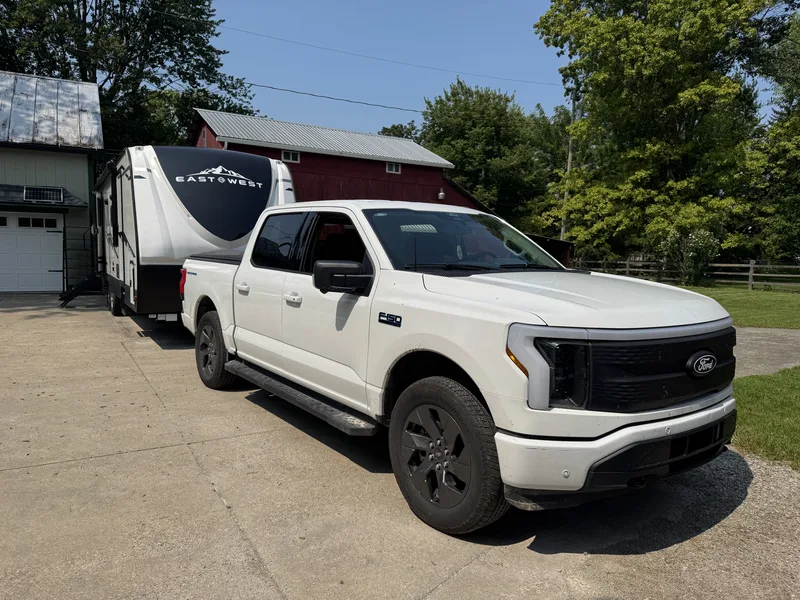
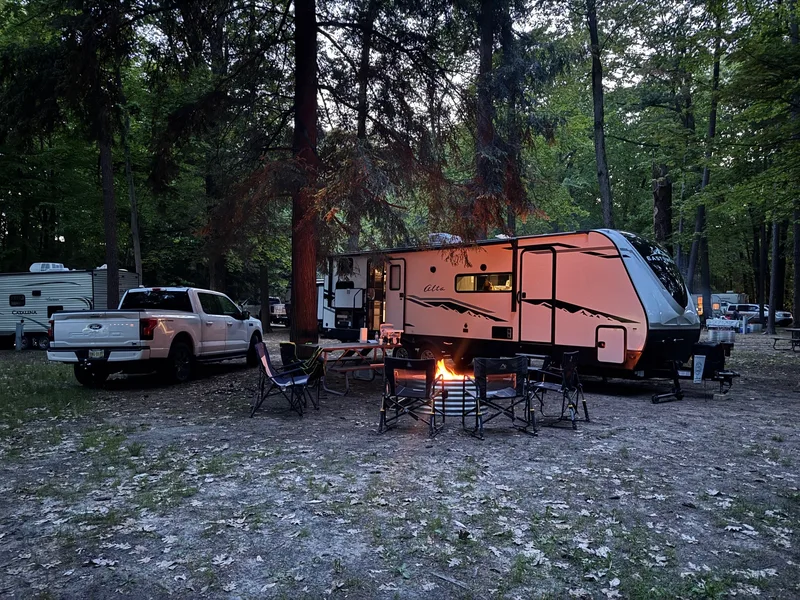
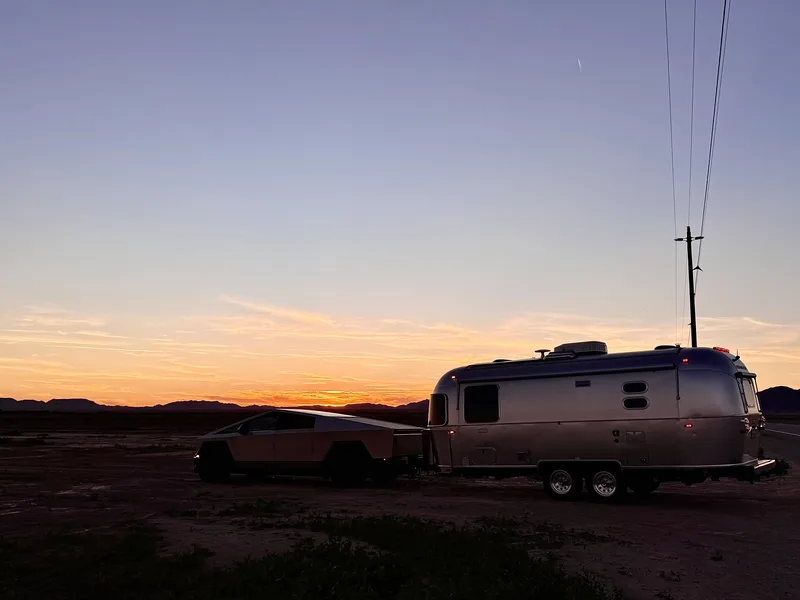
Our latest trip reminded me that the vast majority of camping adventures are much simpler. Instead of driving hundreds of miles across multiple states, we loaded up our 32-foot camper, hitched it to our 2024 Ford F-150 Lightning Flash, and headed about 65 miles to our state park campground for a weekend away with the family.
The experience highlighted something I think often gets overlooked: for local camping trips, an electric truck may actually be the better tow vehicle.
No gas station required
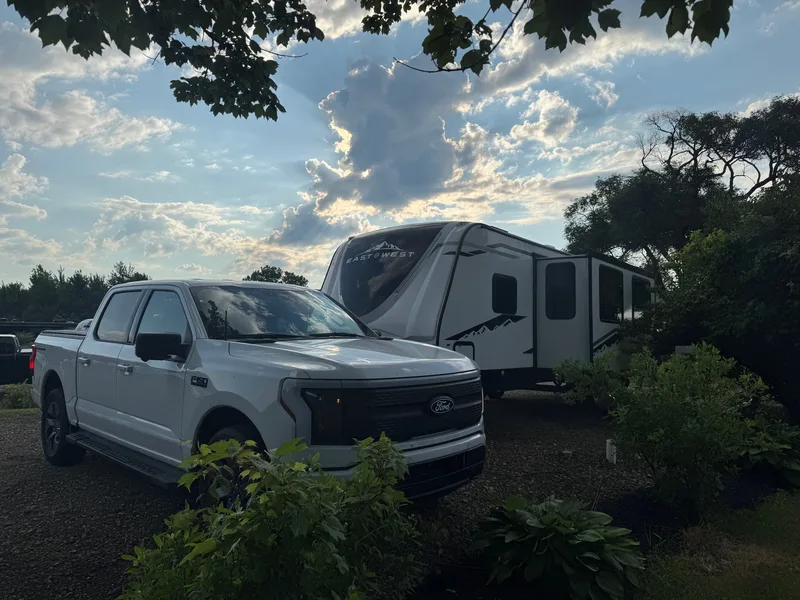
Before leaving home, I simply plugged the truck into my Level 2 charger overnight. The entire fuel stop happened while I was sleeping. Charging enough energy for the round trip cost roughly $10 at my home electric rate. There was no special trip to a gas station, no standing next to a pump, and no wondering what diesel or gasoline prices would be that weekend.
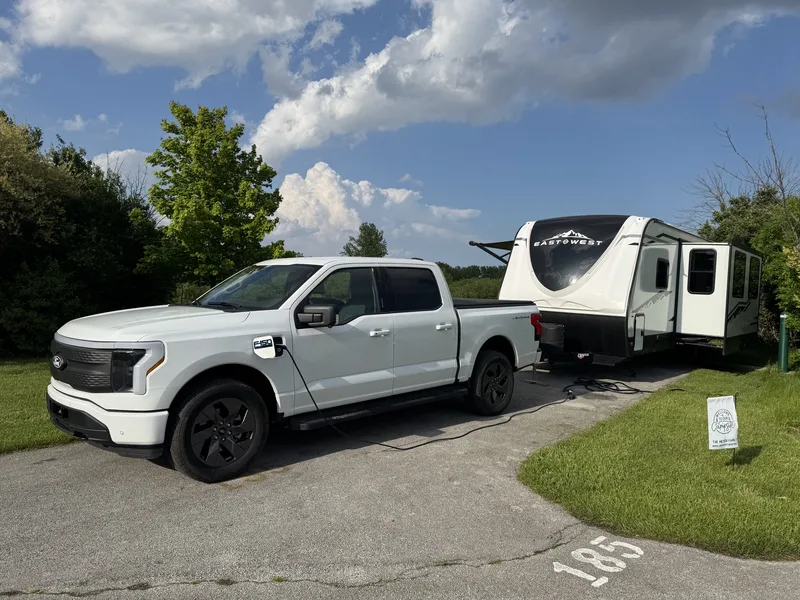
When we arrived at the campground, things got even better. Like many campgrounds, ours included electricity with the campsite. While we enjoyed the weekend, the truck quietly recharged. By the time it was time to head home, it was back to where we started without visiting a public charger. That is one of the biggest hidden advantages of towing with an EV: if you are already paying for an electric campsite, your truck can often recharge while your family enjoys the weekend.
Wind, rain, and real-world conditions
The trip was not ideal for efficiency. Strong winds and the large camper knocked our efficiency down to about 0.7 miles per kWh, well below what the truck achieves without a trailer and what we have seen on longer trips.
Even so, the Lightning handled the drive comfortably. Despite the less-than-ideal conditions, the truck had more than enough range to complete the roughly 65-mile trip each way without stopping to charge. We simply drove to the campground, plugged in after setting up camp, and drove home a couple of days later. That is the kind of simplicity many people do not realize is possible.
The savings add up quickly
One of the biggest surprises continues to be the operating cost. Compared to making the same trip with a comparable gasoline pickup, this weekend alone saved us roughly $100 in fuel costs.
For families that camp several times each summer, those savings can add up quickly. Instead of spending hundreds of dollars on fuel over the course of a camping season, much of that money stays in your pocket.
Quiet makes camping better
One thing that is difficult to appreciate until you experience it is how enjoyable an electric truck is around the campground. Backing into the campsite is easier because the truck moves smoothly and quietly. Early-morning departures do not wake the neighboring campers with a cold engine roaring to life. Loading bikes, coolers, and camping gear from the powered frunk is incredibly convenient, and Pro Power Onboard provides plenty of electricity if you need it for tools, inflating mattresses, or charging equipment. The truck simply feels like it belongs in the camping environment.
Most camping is not cross-country
There is certainly a place for discussing cross-country towing. I have done those trips too, and they require more planning. But those are not the trips most families take. Many campgrounds are within an hour or two of home, and those shorter adventures are exactly where the Ford F-150 Lightning shines.
- No fuel stops.
- No public charging.
- Charge overnight at home.
- Recharge while camping.
- Drive home.
It is a routine that is incredibly simple once you have experienced it.
For the type of camping many families actually do, a weekend getaway at a campground an hour from home, the Ford F-150 Lightning makes an incredibly compelling case.
Final thoughts
Electric trucks are not the perfect solution for every towing scenario, and they do not need to be. That is the honest version: not a truck for every job, but the right one for this kind of trip.
Our windy weekend reduced efficiency to around 0.7 miles per kWh, yet we never needed to stop for a charge. We spent about $10 charging at home, recharged for free while camping, and saved roughly $100 compared to taking a comparable gasoline truck. Sometimes the best camping memories are not about driving farther. They are about spending less time worrying about fuel and more time making memories with your family.
Key takeaway
For the type of camping most families actually do, a weekend getaway at a campground an hour from home, the Ford F-150 Lightning makes an incredibly compelling case. No fuel stops, no public charging, and the truck recharges for free while you enjoy the weekend.
Follow TesCalendar, an EV-towing creator worth your time
FAQ
F-150 Lightning weekend camping, answered
Range, charging cost, and why a local camping trip is where an electric truck shines.
Can a Ford F-150 Lightning tow a camper for weekend camping?
Yes. On this trip a 2024 F-150 Lightning Flash towed a 32-foot camper about 65 miles each way to a state park and back with no public charging at all. It charged overnight at home before leaving and recharged for free on the campsite hookup while the family camped.
What is the F-150 Lightning's towing range and efficiency?
On this windy weekend with a large 32-foot camper, efficiency dropped to about 0.7 miles per kWh, lower than on calmer or longer trips. Even so, the Lightning had more than enough range to cover the roughly 65-mile leg each way without stopping to charge.
How much does it cost to charge an F-150 Lightning for a camping trip?
Charging the truck overnight at home for the round trip cost roughly $10 at a residential electric rate, versus an estimated $100 more in fuel for the same trip in a comparable gasoline pickup. Recharging on the campground hookup was included with the electric campsite.
Is an electric truck good for camping?
For local, weekend-style camping it has real advantages: charge at home before leaving, recharge for free at an electric campsite, quiet backing into the site, no cold engine waking neighbors on early departures, a powered frunk for gear, and Pro Power Onboard for tools and equipment.
EV towing library
More EV towing stories
Field reports, truck comparisons, and the measured data, all in one place.
-
-
-
-
-
-