EV towing · guest field report
450 miles to Lake Michigan and back, towing a 32-foot camper.
Northwest Ohio to Muskegon State Park with a 2024 Ford F-150 Lightning Flash and a 32-foot, 8,000-pound trailer. Two charging stops on the way up, overnight power at the campsite, and only one stop on the drive home. This is the medium-distance weekend most families actually take.
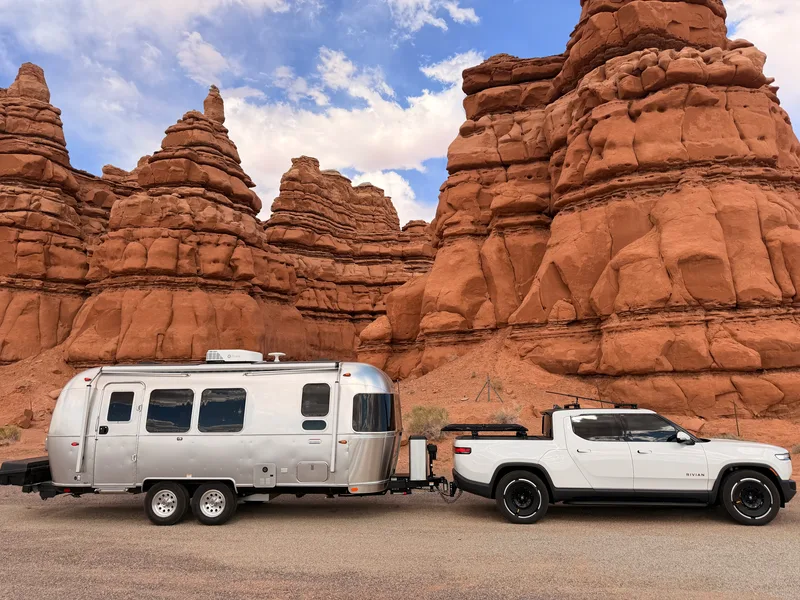
Part of the Ford F-150 Lightning corner. Compare it on the EV truck towing comparison, or see our own Rivian + Airstream towing data.

Guest field report
Towing a 32-foot camper 450 miles with the Ford F-150 Lightning
Northwest Ohio to Muskegon State Park on Lake Michigan and back: about 225 miles each way with a 32-foot, 8,000-pound trailer. A couple of charging stops on the way up, overnight power at the campsite, and only one stop on the way home. This is the medium-distance weekend most families actually take.
A relaxing weekend at Muskegon State Park
One of my favorite things about owning an electric truck is not the technology. It is that owning one gets us outside more often.
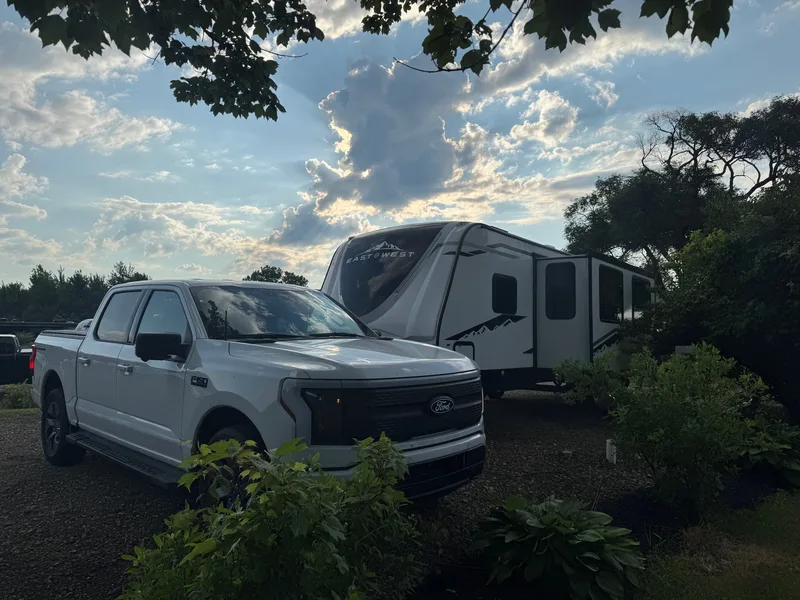
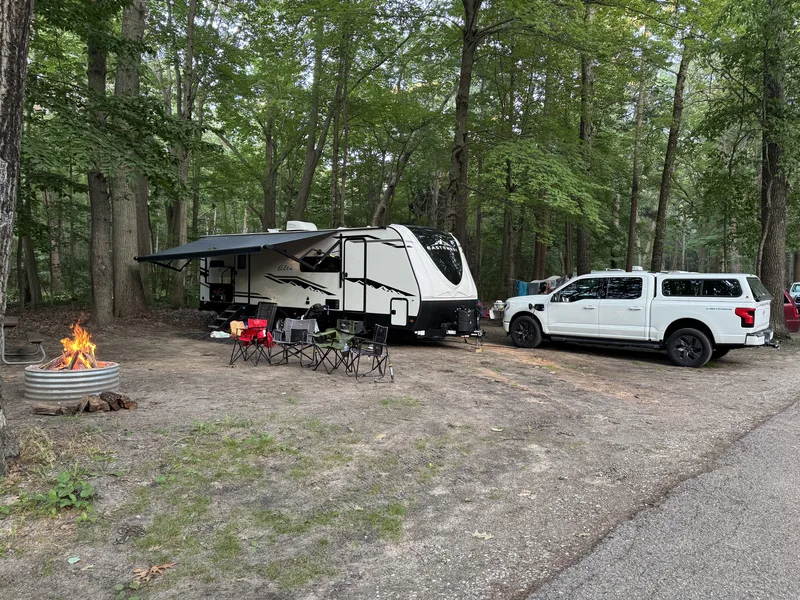
For this trip we packed up our 32-foot East to West Alta 2800KBH travel trailer and headed from northwest Ohio to Muskegon State Park on the shores of Lake Michigan. At roughly 225 miles each way, 450 miles round trip, it is the perfect medium-distance camping adventure.
This is probably what camping looks like for most American families. Most people are not towing 1,000 miles across the country every weekend. They are heading a couple hundred miles to a nearby state park, lake, or campground for a long weekend and then driving home. At 450 miles round trip, this trip is actually on the longer end of what many families would consider a typical getaway.
That is exactly why I wanted to document it. We have covered longer road trips before, but this kind of weekend is much more representative of how most people actually use their trucks and campers. It takes just a couple of charging stops on the drive north, offers convenient overnight charging at the campground, and still leaves plenty of time to relax and enjoy the weekend.
Our camping setup
For this trip we towed our 32-foot East to West Alta 2800KBH, weighing approximately 8,000 pounds, with our 2024 Ford F-150 Lightning Flash.
One feature I continue to appreciate is the Lightning’s massive front trunk, or frunk. It stores all of our charging equipment, adapters, tools, and emergency supplies while keeping the cab uncluttered. That extra storage makes packing for a family camping trip much easier.
Before leaving home, I always charge the truck to 100% and leave it plugged in while we finish packing. This lets the truck cool the cabin using shore power instead of the battery, so every available mile of range is ready when we pull out of the driveway.
A small modification that made a big difference
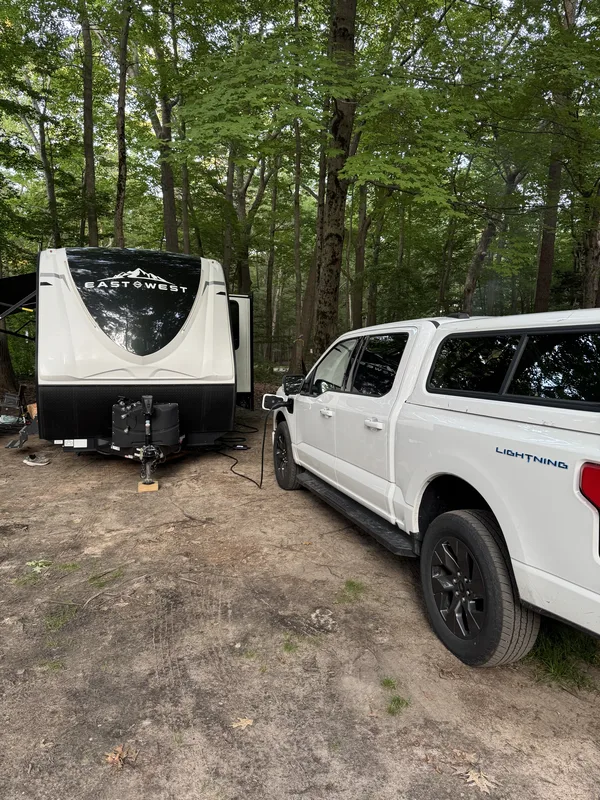
Recently I installed a truck topper. I bought it for weatherproof storage: it keeps our firewood, stroller, and camping gear dry during the drive. What surprised me was the improvement in towing efficiency.
The topper appears to reduce some of the turbulent air between the truck and the trailer, letting the truck move through the air a little more cleanly. It was not designed for that, but the real-world improvement has been meaningful. The biggest benefit came on the return trip: the efficiency gain let us eliminate an entire charging stop. I will do a dedicated comparison in a future video, but after several trips I am convinced the topper makes a noticeable difference.
The drive to Michigan
The first leg takes us about 110 miles to Lansing, Michigan. This is usually the most challenging stretch because we often hit strong headwinds. Rather than fight it, I settle into the right lane, set the adaptive cruise control, and let the truck do the work. This is where the Lightning really shines.
Even towing nearly 8,000 pounds, acceleration is effortless whenever I need it. The truck feels stable, even in crosswinds, and the quiet electric drivetrain makes highway towing far more relaxing than most traditional pickups. Without engine noise or constant gear changes, long stretches become genuinely enjoyable. I have driven a lot of trucks over the years, and I honestly do not think I have driven another half-ton that tows as comfortably as the Lightning.
Charging while towing
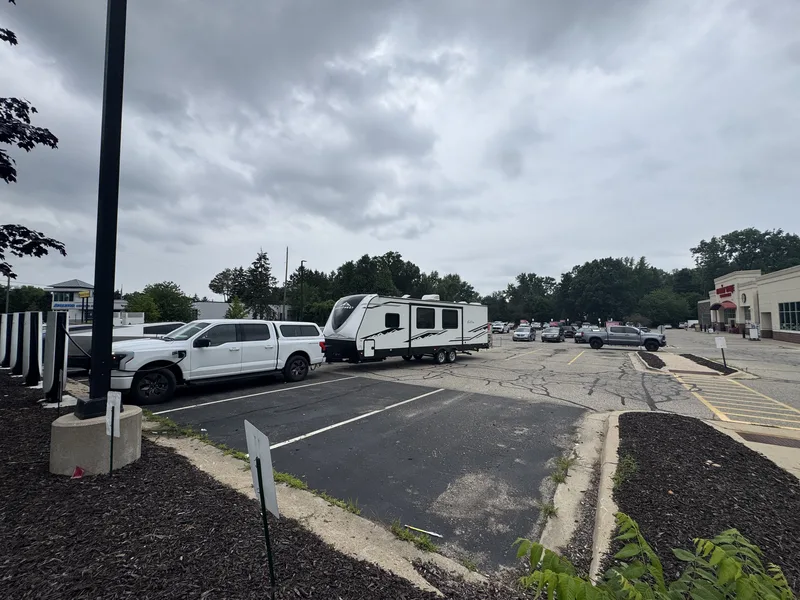
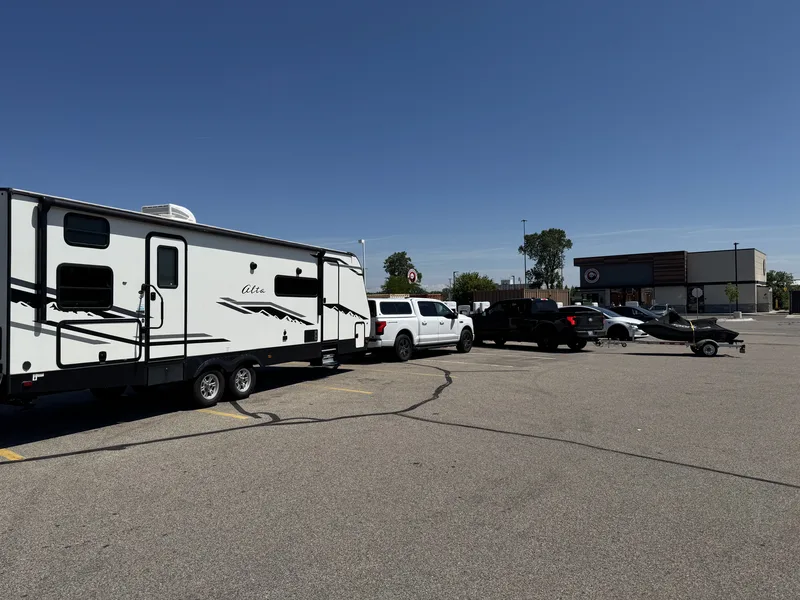
One of the biggest misconceptions about towing with an electric truck is that charging becomes a hassle. That has not been our experience. Our first stop in Lansing lined up perfectly with lunch. We grabbed Culver’s while the truck charged, and by the time we finished eating it was ready to continue.
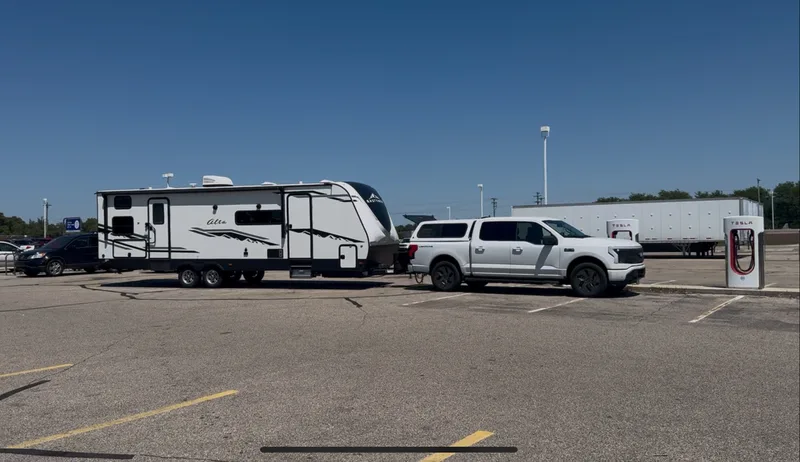
Our second stop near Grand Rapids was just as easy. Tesla’s newer Superchargers with longer V4 cables let us charge without disconnecting the trailer. Pull in, plug in, take a quick bathroom break, and continue on. It makes charging feel like a normal road-trip break instead of an inconvenience.
Camping with an EV
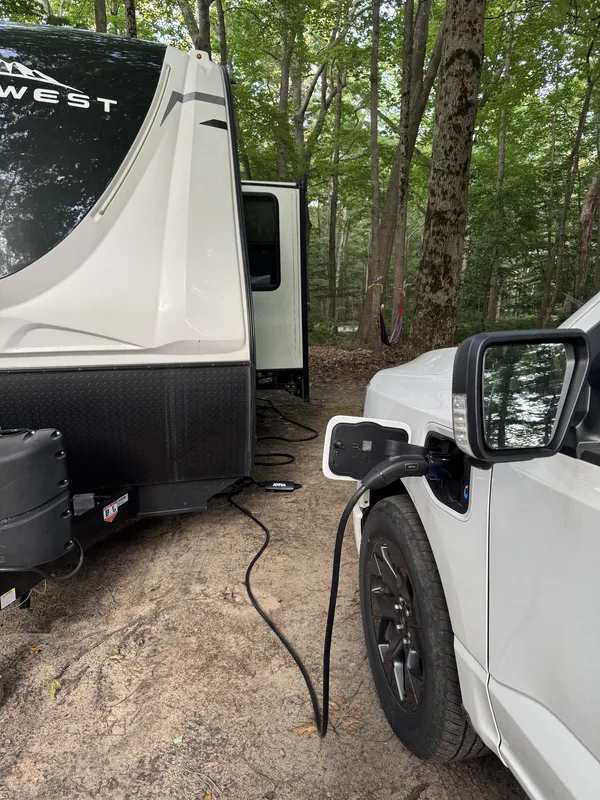
One of the best parts of camping with an electric truck is arriving at a campsite that already has power. At Muskegon State Park, I plugged into the campground pedestal with the Jowua Mobile Connector. Instead of charging at full power, I dialed the current down to 19 amps. That let us run the camper’s air conditioner and charge the truck overnight at the same time, without overloading the campground’s electrical service.
It is a simple feature, but it makes a huge difference for RV owners. By the next morning the truck was mostly charged and ready for another day of exploring.
Why we love Muskegon State Park
If you have never visited Michigan’s west coast, you are missing one of the Midwest’s hidden gems. Muskegon State Park has sandy beaches, towering dunes, scenic hiking trails, bike paths, and some of the best sunsets on Lake Michigan.
Whether you are camping, hiking, swimming, or sitting around the campfire, it is one of our favorite places to be. At the end of the day, the truck and camper are not the destination. They are the tools that help our family spend more time together outdoors.
The drive home
The drive home turned out to be effortless thanks to a slight tailwind. Between the favorable weather and the efficiency gain from the topper, we made it from Muskegon back toward home with only one Supercharging stop. That was the first time we have ever run this route with a single charging stop on the return.
By the time we arrived home we had averaged 1.01 miles per kilowatt-hour while towing nearly 8,000 pounds. For a full-size travel trailer, that is an excellent result. It is amazing how a relatively small efficiency gain can erase an entire charging stop over a few hundred miles.
The total for DC fast charging on the trip came to about $110. Compared with a similar gas truck averaging around 8 MPG while towing, that is roughly half the fuel cost for the same journey.
Trip summary
- Round-trip distance: 450 miles
- Tow vehicle: 2024 Ford F-150 Lightning Flash
- Travel trailer: East to West Alta 2800KBH, approximately 8,000 lbs
- Average efficiency: 1.01 mi/kWh
- DC fast charging cost: approximately $110
- Campground charging: overnight Level 2 on the site pedestal
- Return trip: a single charging stop
Camping with an electric truck is not about proving it can be done. It is about spending less on energy, a quieter and more relaxing drive, and more time together in places like Muskegon.
Final thoughts
Every towing trip reinforces the same conclusion: the Ford F-150 Lightning is an outstanding tow vehicle. It is quiet, smooth, comfortable, and has more than enough power to confidently pull a large travel trailer. Charging takes a little planning, but the stops line up with the meals and breaks we would take anyway.
The topper added weatherproof storage and enough efficiency to erase a charging stop on the way home. Arriving at the campground, plugging in overnight, running the air conditioner, and waking up to a full truck only adds to the convenience.
Most of all, trips like this show that electric-truck ownership fits how many families already camp. A weekend getaway a couple hundred miles from home is common across the country, and the Lightning handled this one with ease. After another good 450-mile adventure, we are already planning the next one.
Key takeaway
A 450-mile round trip is on the longer end of a typical family camping weekend, and the Lightning handled it with two charging stops northbound and a single stop home. It averaged 1.01 mi/kWh towing nearly 8,000 pounds, cost about $110 in DC fast charging, and recharged overnight on the campground pedestal while the air conditioner ran.
Follow TesCalendar, an EV-towing creator worth your time
FAQ
Towing a camper 450 miles with the Lightning, answered
Range, charging cost, efficiency, and charging overnight at the campsite.
Can a Ford F-150 Lightning tow a camper 450 miles?
Yes. On this trip a 2024 F-150 Lightning Flash towed a 32-foot, 8,000-pound camper 225 miles each way from northwest Ohio to Muskegon State Park and back. It took two DC fast-charging stops on the drive north, charged overnight on the campground pedestal, and needed only a single charging stop on the way home.
What efficiency does the F-150 Lightning get towing a 32-foot camper?
Over the full 450-mile round trip the Lightning averaged 1.01 miles per kWh while towing nearly 8,000 pounds. Adding a bed topper reduced turbulence between the truck and trailer enough to improve efficiency and eliminate one charging stop on the return leg.
How much does DC fast charging cost for a 450-mile camping trip?
On this trip DC fast charging totaled about $110, roughly half the fuel cost of a comparable gasoline truck averaging around 8 MPG while towing. Overnight charging on the campground electrical pedestal was included with the site.
Can you charge an electric truck at a campground while running the air conditioner?
Yes. At Muskegon State Park the truck plugged into the campsite pedestal with a Jowua Mobile Connector set to 19 amps. Reducing the charging current let the camper run its air conditioner and the truck charge overnight at the same time without overloading the campground service.
EV towing library
More EV towing stories
Field reports, truck comparisons, and the measured data, all in one place.
-
-
-
-
-
-