EV towing
Towing to Thanksgiving in an EV: cold range and winter roads
A late-November tow is a different trip from a summer one. The cold takes a real bite out of an EV’s range before the trailer takes its share, and winter roads ask for slower speeds and longer gaps. Plan the holiday drive around both and the miles stay calm.
Start from our numbers, then pad for the cold
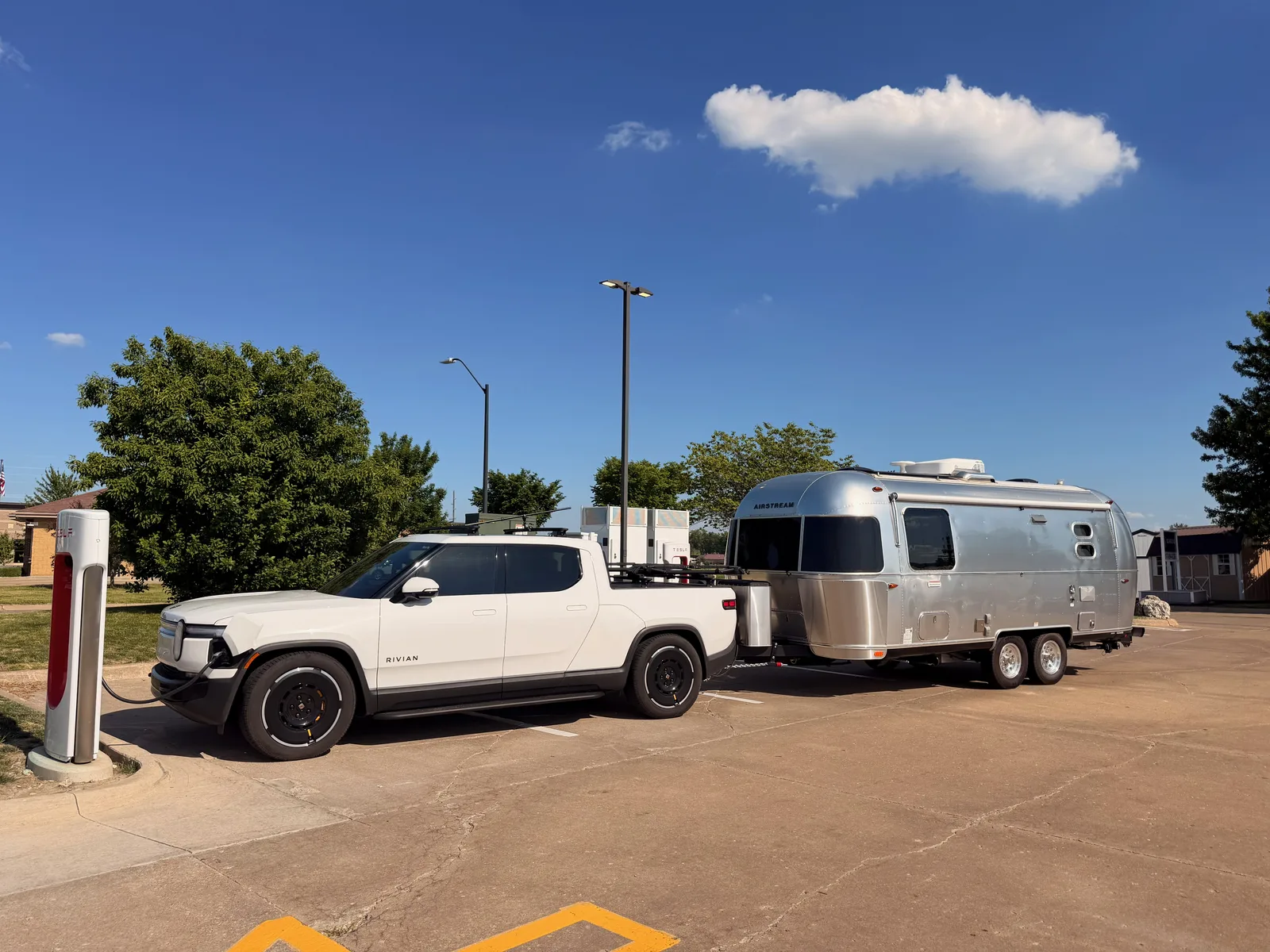
- What our ledger measured Across 51 tow segments and 5,261.5 measured miles, our Rivian R1T pulling the 23-foot Airstream averaged 1.24 mi/kWh, about 175 miles on a full pack, and we plan tow hops of 100 to 120 miles. Temperature showed up even in summer: segments above 85°F averaged 1.02 mi/kWh against 1.25 in mild 70 to 85°F weather.
- What it does not cover Every one of those legs was driven between May and July, and the coldest daily low in the ledger is 50°F. We have not measured a freezing tow, so treat our numbers as the best case for a November trip, not the plan.
- Pad the hops before you leave Our cold-range tip plans around 25 percent less range in the cold. Taken off our 100 to 120 mile summer hops, that is roughly 75 to 90 miles between chargers: a planning estimate, not a measurement. The cold-range and preconditioning tips have the habits that win some of it back.
Plan the road and the stops
- Keep a second charger in range on every leg A holiday travel day is a bad day to find the one charger you planned on taken or down. Map the route in your planner, pick stalls you can reach with the trailer hitched, and keep a backup within reach of each leg.
- Check conditions before you hitch The Wisconsin Department of Transportation says to check highway conditions and incidents at 511wi.gov before heading out, to tell someone your route and expected arrival time, and to fully charge your phone. In a severe winter storm it suggests postponing the trip.
- Slow down and open the gap WisDOT says most winter crashes and slide-offs come from driving too fast for conditions, that posted limits apply to ideal conditions, and to allow extra travel time and following distance. It says never to use cruise control in wintry weather and to stay at least 200 feet behind a working snowplow. With a trailer behind you, give yourself even more room.
- Pack the winter kit in the truck, not the trailer WisDOT’s winter kit list includes blankets, hats and gloves, a flashlight, a first-aid kit, booster cables and a scraper, water and high-calorie food, sand or cat litter for traction, and a phone charger. Keep it in the tow vehicle, where you can reach it if you are stuck.
From our workshop
- Flow Bench: See how air moves through a velocity stack before you print it.
- TapIn: Put a gym, library, museum or club card in Apple Wallet or Google Wallet, free.
Use this tip